
The Tactile Silhouette: Mastery of Fabrics and Forms in the Kibbe System


A Curator’s Guide to the Material Essence of Style
In the high-stakes world of personal aesthetic, the silhouette is the skeleton, but the fabric is the soul. David Kibbe’s Metamorphosis, published in 1987, revolutionized the fashion industry by shifting the focus from “fixing” perceived flaws to honoring innate physical traits. Before Kibbe, styling was often a pursuit of the “ideal” hourglass, regardless of a person’s natural bone structure. Obviously, this was not the point. Kibbe introduced a radical philosophy: style is a symbiotic relationship between biological architecture and textile behavior. He categorized the human form into thirteen types based on the interplay of Yin (feminine, soft, rounded body features) and Yang (masculine, sharp, angular characteristics), providing a roadmap for individuals to dress in “total harmony” with their natural lines.
Beyond the physical harmony of bone structure and fabric, Kibbe’s system serves as a bridge between the external self and the internal spirit. He posits that a person’s “Image Identity” is not merely a collection of measurements, but a holistic reflection of their innate personality and aesthetic taste. By identifying where one sits on the Yin/Yang spectrum, an individual gains insight into their natural essence.
While its origins are rooted in a specific era of Western fashion, the Kibbe system is fundamentally universal, transcending cultural and geographic boundaries. Whether through the starched precision of East Asian silks or the lush, tactile drapes of West African weaves, Kibbe’s typologies act as a universal language, allowing every culture to express its traditional heritage through the lens of individual biological architecture.
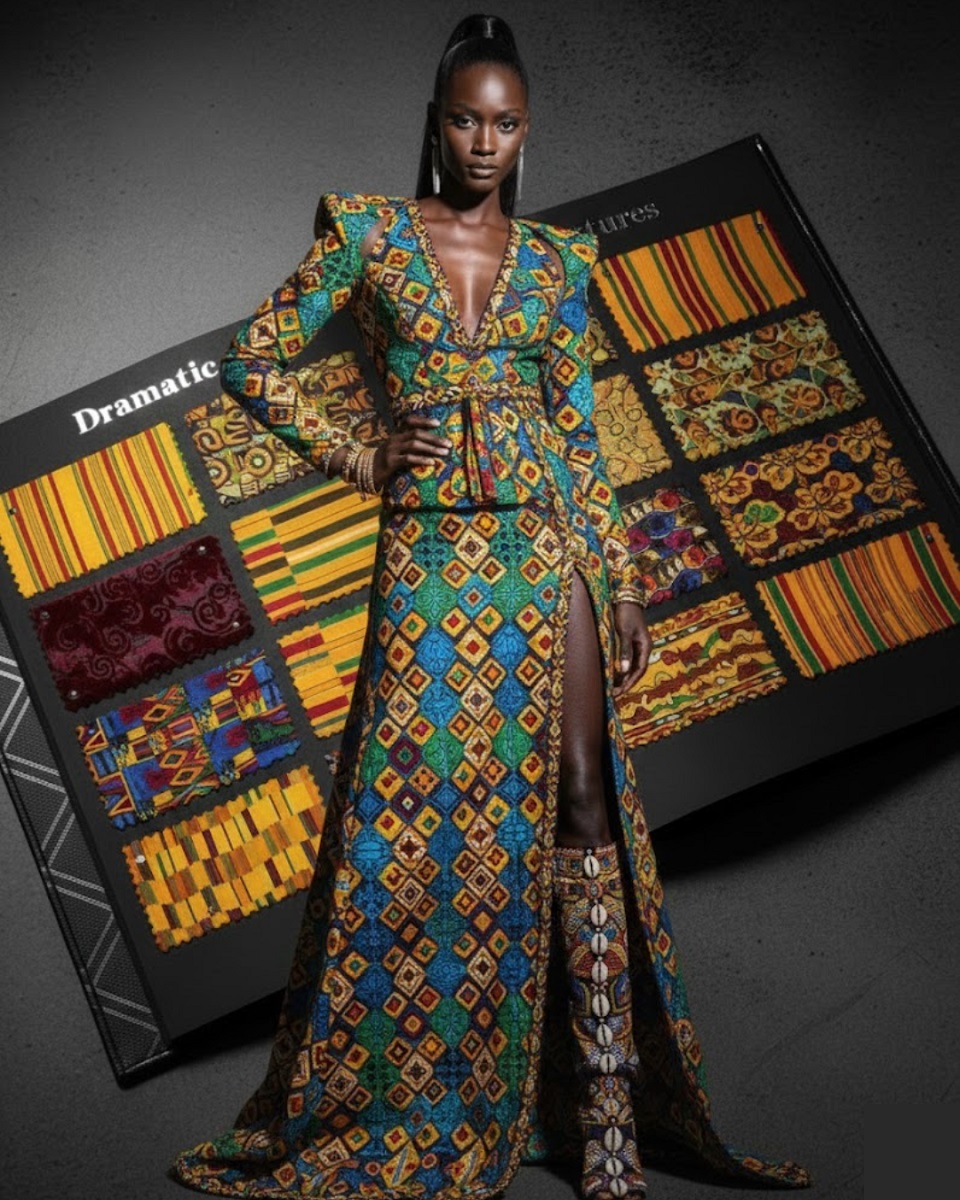
The Dramatic: The Authority of Structure
For the Dramatic, fabric is a tool of precision. This typology requires materials that hold a sharp, clean edge and support a long, unbroken vertical line. Soft, flimsy materials are the Dramatic’s greatest adversary, as they collapse against the sharp angles of the frame. Instead, look to high-tension textiles: heavy Italian wools, crisp gabardines, and starched poplins. The goal is “architectural purity” garments that possess enough integrity to maintain their shape regardless of movement.
In formal wear, the Dramatic shines in stiff brocades and heavy, lustrous silks like duchess satin, which provide a sculptural quality. Psychologically, these armored fabrics project unshakeable command. The rigidity of the material mirrors an internal discipline, signaling a persona of visionary intent and unwavering self-possession.


Image Souces: created by Dr. Manuela Pirola
The Romantic: The Poetry of Fluidity
The Romantic represents the antithesis of the Dramatic’s structure. To honor the lush, rounded Yin of this type, fabrics must be soft, pliable, and inherently tactile. The material should never fight the curve; it must surrender to it. Lightweight silks, delicate chiffons, and buttery crepes are the standard, allowing for the intricate draping and ruching that define the Romantic silhouette. Patterns should follow suit, favoring lush, swirling florals over rigid geometry.
Tactility plays a vital role here, plush velvets, angora knits, and fine laces provide a sensory richness that emphasizes the Romantic’s magnetic vulnerability. Psychologically, these touchable, moving fabrics signal emotional openness. It is a style that favors the dreamlike, where the softness of the textile invites connection and evokes an ethereal sensuality.


Image Souces: created by Dr. Manuela Pirola
The Classic: The Luxury of Moderation
The Classic typology is an exercise in the “golden mean,” requiring fabrics that are neither too stiff nor too fluid. Balance is key. The hallmark of Classic material is exceptional quality and restraint, often expressed through smooth, matte finishes. Think of the world’s finest natural fibers: high-quality wool, lightweight cashmere, and silk jersey. The weave must be refined and even, avoiding irregularities that disrupt symmetry.
By choosing materials that suggest quiet luxury such as a perfectly pressed linen-silk blend or smooth calfskin, the Classic projects stability and poise. Psychologically, this adherence to refined, mid-weight fabrics communicates reliability. It is the wardrobe of the diplomat, where impeccable material choices mirror a balanced and sophisticated mind.

Image Souces: created by Dr. Manuela Pirola
The Natural: The Texture of the Earth
The Natural typology finds its power in unconstructed beauty, making texture the most critical element of the wardrobe. Raw silks, nubby bouclés, heavy denims, and tumbled leathers reflect the blunt, strong Yang of this type. These fabrics possess a “lived-in” vitality that suggests movement and authenticity. Patterns work best when they feel organic soft plaids, hand-drawn motifs, or elemental prints.

Chunky knits and earth-toned suedes further ground the Natural, emphasizing freedom and ease. Psychologically, these rugged materials reject artificial glamour, signaling confidence without pretension. It is a sartorial expression of the outdoors adventurous, grounded, and real.

Image Souces: created by Dr. Manuela Pirola
The Gamine: The Energy of Crispness
The Gamine, a blend of sharp Yang bones and delicate Yin features, requires fabrics that are as animated as the personality itself. The key is crispness on a small scale. Twills, piqué cottons, and fine-grained leathers maintain sharp lines without overwhelming the frame.

Image Souces: created by Dr. Manuela Pirola
The Gamine thrives on contrast and high-impact patterns bold stripes, polka dots, or color blocking. Psychologically, this playful precision reflects wit and vitality. By choosing fabrics that hold shape in short, broken lines, the Gamine communicates an energetic persona that embraces contradiction and surprise.
The journey toward mastering the Kibbe system reveals that style is the ultimate act of self-recognition. David Kibbe’s contribution was to liberate us from the tyranny of “one-size-fits-all” trends, teaching us that our physical clues, the sharpness of a shoulder, the softness of a cheek are keys to authentic self-expression. Understanding the feel of your typology, the weight of wool, the drape of silk, anchors personal style in a world of fleeting fashion. When material choices align with internal essence, we stop wearing costumes and begin wearing reflections.

