
Threads, Time and a Very Serious Beanie



Every brand has an origin myth. Le Bonnet begins with a lost beanie and a stubborn refusal to accept a bad replacement. Fresh out of Hotelschool and working in hospitality, Matthieu Jansen kept reaching for a winter hat that no longer existed. The copies were close but not quite. too flimsy, too loud, too forgettable. So he did the unreasonable thing and called the Scottish factory that had made the original, asked a few questions, and ordered twenty samples. There was no grand plan, just a feeling that if you can get one everyday object absolutely right, it might earn a life of its own.
From that phone call came Le Bonnet, and from Le Bonnet came THREADS, a small publication that arrives ten years later like a field report on what can grow from one very serious beanie. The tone is calm, almost matter-of-fact. No fireworks. Just people, yarn, clay, soil, paint, wine, and time.
Images Source: Press Office
Matthieu did not build this alone. He pulled in his former roommate, Vasco de Vries, the rational counterbalance to his instinct-first approach. Years of sharing an apartment had already exposed every annoying habit. If they could survive cleaning rotas and late rent, a company stood a chance. They learned by getting it wrong. Orders collapsed, stock sat in boxes, rent still had to be paid. They kept going. The first office in Amsterdam came with a leftover bar, which tells you everything about the early years: a place where friends dropped in, drinks appeared, orders were packed while someone leaned on the counter and talked. The knitwear was precise. The atmosphere refused to be stiff.
The beanies themselves came from Scotland, from a mill that has been turning yarn into something useful for generations. Each piece moves through many hands, from spinning to finishing to the final check. Over time the color card expanded from quiet neutrals to shocks of Fluo Yellow and Grape. Somewhere along the way, Bruce Springsteen left a New York shop with fourteen beanies. A letter from Denmark arrived, politely explaining that a queen had misplaced her favorite blue hat and needed another. Harrods placed an order. A collaboration with a French photographer took Le Bonnet to Ghana, where portraits of locals in beanies helped raise money for water wells. The world came a little closer, one head at a time.

Images Source: Press Office
THREADS looks back on this decade by shifting the spotlight away from the product and onto the people who live in that same slow, deliberate rhythm. In Amsterdam, ceramicist May Liok builds her work without a wheel. Clay is kneaded, pulled, and stacked by hand, layer after layer, day after day. A tall vessel comes to life slowly, resting between sessions so it does not collapse. Sometimes she fires and glazes in one step so that everything moves at once. Other pieces stay raw, the fingerprints unapologetically visible. For years her palette leaned toward quiet, sandy tones. Then life became complicated, and the work responded with red, blue, and green. Clay turned into a way to think in three dimensions, not just a neutral lifestyle prop. In the images, a beanie and sweater appear in the studio almost as tools, the same way a bucket or sponge is a tool. Something you reach for without ceremony.
At restaurant BAK , chef Benny Blisto uses seasons as his real calendar. The menu is driven by whatever the farmers, gardeners, and fishermen bring in. Shellfish when the water is cold. Leaves and shoots in spring. An almost unruly abundance in late summer. Autumn with its mushrooms and roots, his favorite. Sustainability is not a slogan on the wall; it is the simple choice to work with people whose names you know and whose land you intend to see again. In his own kitchen at home, he cooks like many exhausted parents: big pots of pasta and rice, vegetables smuggled wherever they can fit. In both worlds the clothes are practical, knitwear that can handle steam, cold air, and bicycle rides along the water.
Photographer and gardener Lou-Lou van Staaveren lives by another kind of time code. Her days bend around light and growth cycles. Dahlias, narcissus, tulips, the quiet geometry of winter beds. She runs Pleasant Place, a publication about the pleasures of gardening, and builds imaginary gardens in her images by blending fragments from different locations. A path from one landscape, a tree from another, a horizon line stolen from a third. Real tools ground the fantasy: heavy hand-forged spades, an old carnation knife, soil under the fingernails. She keeps a mental atlas of gardens worth traveling for and repeats the same simple truth to anyone who claims they have no green thumb: Things die. You plant again. Over time, the garden teaches you how to look. In her portraits for THREADS, a ribbed beanie moves through fields and potting sheds, woven into the routine rather than posed on top of it.
Where Lou-Lou’s world is soft and alive, artist Aldo van den Broek comes at life with cardboard, wood, and metal. Self-taught, he never learned the classical rules and therefore never felt compelled to obey them. Panels are scratched, glued, painted, torn, and reassembled until they resemble fragments of city walls loaded with memory. Folds from travel become part of the composition. Cigarette packs act as tiny sketchbooks, stuffed in pockets, later glued into a larger piece, their creases and stains intact. Children splash paint on nearly finished works. Dogs chew on canvases. Rain hits surfaces left outside. None of this is damage in his eyes. It is biography. In the photographs, the knit layers he wears almost merge with the textures behind him, as if he and the work and the clothes share one long conversation.
Images Source: Press Office

The final vignette belongs to wine merchant Sjaak Nan, who stands behind shelves that hold about 450 different bottles, France, Italy, Germany, Austria, South Africa, Chile. Each one is the result of land, weather, nerve, and patience. Most customers begin with an apology. They know nothing about wine. He asks a few questions, listens, and nudges them a step to the side of what they usually drink. A good match is less about price and more about context: who is at the table, how the day went, what needs to be forgotten or marked. An expensive bottle of Pétrus is memorable, sure, but so is a simple bottle shared after a long week if the conversation is right. Sjaak’s knitwear is not styled here. It is just what you put on before unlocking the door on a cold morning.
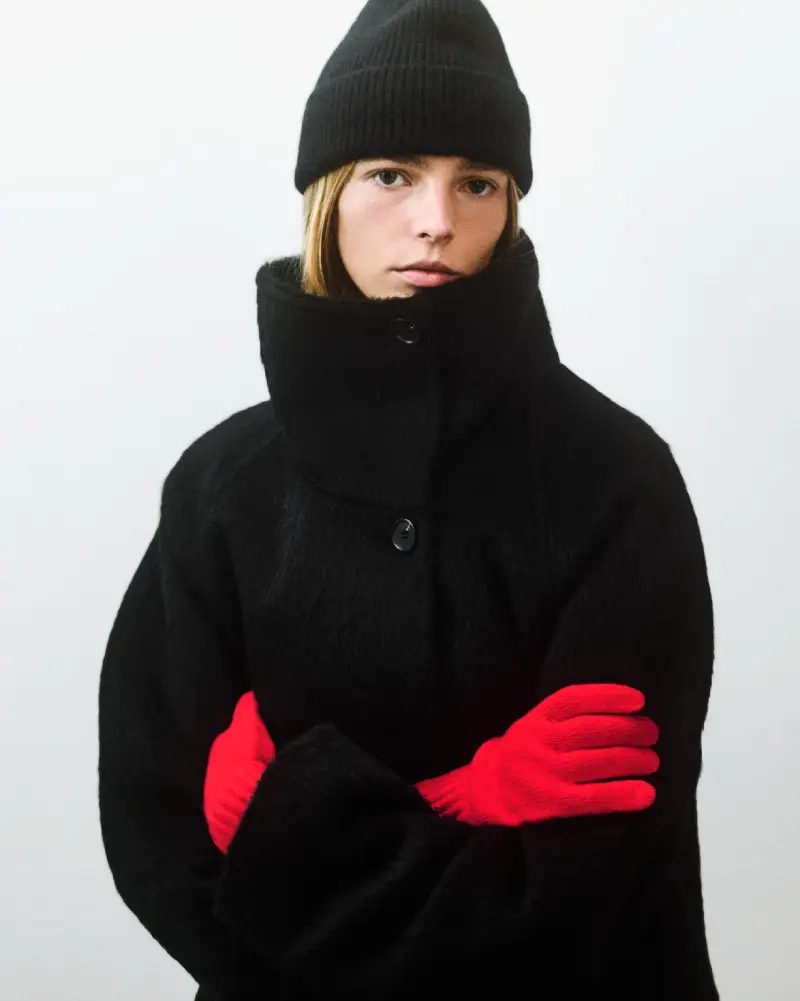
By the time THREADS circles back to the Classic Beanie, you understand the quiet point. The hat is not the star of a glossy campaign. It is a recurring character in a set of lives that value rhythm, practice, and patience. The Soft Icon spread lays out a grid of beanies in Silver, Soft Mint, Clay, Moss, Sand, Grape, Espresso, Snow, Slate Grey, Onyx, Wine, Walnut, Croco, and Crimson. It feels less like a product range and more like a color diary of ten winters.

Images Source: Press Office
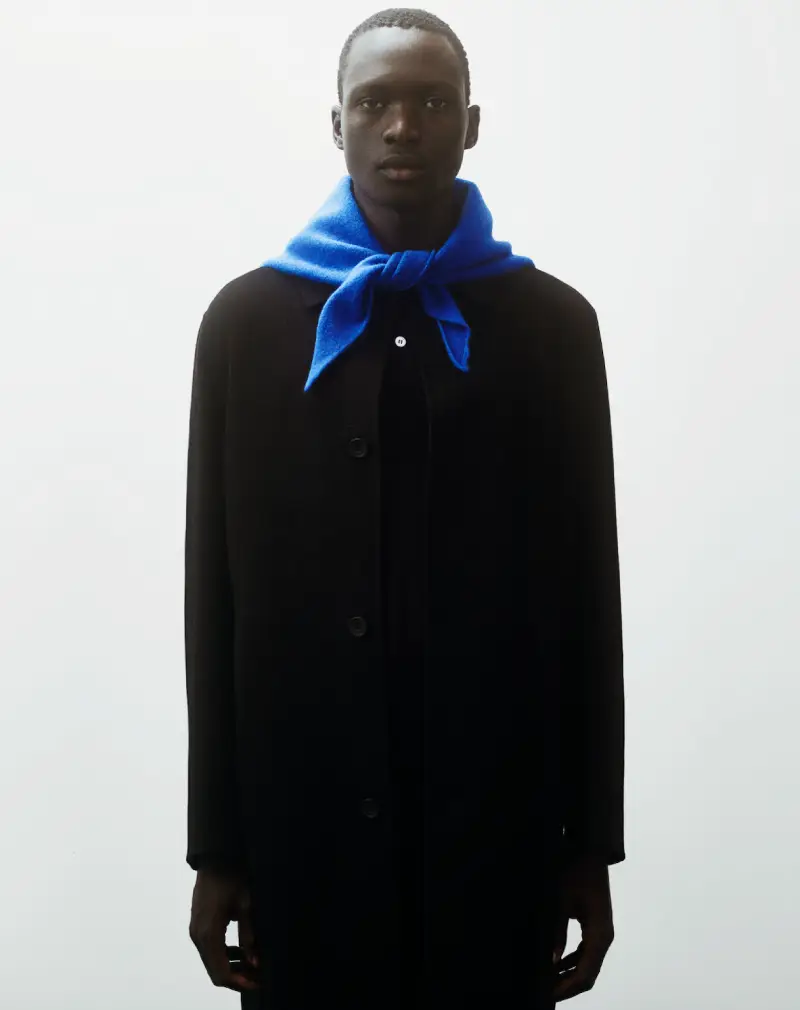
There is one new arrival: the Bandana, a simple triangle of wool that can be tied, wrapped, or draped worn tight against the neck on a bike or loose over a coat on a late-night walk. It behaves like a small gesture, the kind that quietly changes how everything else sits on the body.
In the end, THREADS reads as a gentle refusal of speed. Ten years, one beanie, a growing circle of people who still believe in doing something properly, even when no one is watching. No big slogan. Just a line that runs from a Scottish mill to an Amsterdam bar-turned-office, through clay studios, service kitchens, gardens, warehouses, and wine cellars. A decade of color and craft, held together by the simple act of putting something on your head and stepping out the door.
What's Your Reaction?

