
The “Castle of the Clavesana” in Andora Reopens as a Museum Hub with the Exhibition “Figures of Women”


The “Castle of the Clavesana” (known as Paraxo) in Andora, in the province of Savona (Italy), has officially reopened to the public as a new premier museum hub. The structure has been brought back to life thanks to an urban regeneration project funded by the Ministry of Culture through the NRRP (National Recovery and Resilience Plan).
Inaugurating the space is the major exhibition “Figures of Women. Art Treasures from the Cavallini Sgarbi Foundation”, open starting Monday, August 10.
On display are 35 paintings and sculptures from the prestigious Cavallini Sgarbi Collection (protected by the Ministry of Culture). It is a journey spanning over four centuries of Italian art history, from the 16th to the 20th century, exploring the role and representation of women between sacred and profane, myth and reality. Masterpieces include works by celebrated artists such as Artemisia Gentileschi, Guido Cagnacci, Orsola Maddalena Caccia and Ignazio Stern. The exhibition is curated by Vittorio Sgarbi and Pietro Di Natale, with supervision by Elisabetta Sgarbi for the Cavallini Sgarbi Foundation, in collaboration with the Municipality of Andora and the Borgo Castello Foundation.
Beyond offering a glimpse into the beauty of Italian art, visiting the exhibition also prompts overall reflections on the representation of the female body over time and the use of color.
The Body and Soul of Women Through the Centuries

Carlo Bononi, Sibilla, 1600–1606. Oil on canvas, 125 × 290 cm.
Image Courtesy of Fondazione Cavallini Sgarbi
If we wanted to trace a visual and emotional map of the feminine universe across the centuries, we would first have to clear our minds of the asphyxiating and geometric canons imposed by digital modernity. The ideal of extreme thinness that currently dominates runways and social media is, after all, a recent invention, a contemporary paradox that stands in stark contrast, as the exhibition suggests, with the millennial celebration of the female form in art and visual culture.
The Earth and the Generosity of Forms
For long stretches of human history, the female body has been painted and sculpted in its fullness, conceived as a temple of abundance, fertility, and life. From the earliest Paleolithic Venuses, characterized by generous bodies, wide hips, and full breasts, all the way to the opulent and sinuous Baroque figures, beauty was long synonymous with organic fullness.

Johann Carl Loth, Paride consegna ad Afrodite la mela d’oro (Paris Gives Aphrodite the Golden Apple), 1665–1670. Oil on canvas, 140 × 178 cm.
Image Courtesy of Fondazione Cavallini Sgarbi
The soft, lavish, and voluptuous bodies immortalized by the great masters of the past were not merely expressions of a transient aesthetic taste; they embodied the generating power of the earth. Woman was seen as an unstoppable and reassuring vital force. The roundness of forms celebrated prosperity, health, and a bold sensuality, miles away from today’s concept of physical slenderness and fragility. On the canvases of European masters, female flesh reflected light with voluptuousness, telling of a beauty that did not ask permission to take up space, but imposed itself with majestic authority.
The Grammar of Colors: Contrasts and Nuances of Being

Simone Cantarini, Allegoria della Pittura (Allegory of Painting), c. 1640. Oil on canvas, 111.5 × 98 cm.
Image Courtesy of Fondazione Cavallini Sgarbi
Alongside the volume of the bodies, painting and visual culture entrusted colors with the task of decoding complex female psychology. In the antechamber of art history, the color palette is never neutral: it is a battlefield and harmony where visceral strength and deep vulnerability collide and meet.
On one hand (as clearly seen in the images related to the exhibition), we find the use of bold pairings, with vibrant and complementary tones, such as the striking dialogue between green and red. Green, linked to nature, regeneration, and tranquility, acts as a counterpoint to the charge of red. This visual dualism amplifies the perception of a femininity that knows how to be grounded and calm, yet at the same time an inexhaustible source of energy.
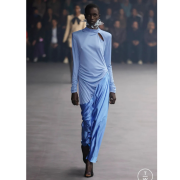
On the other hand, the scene opens up to softer, bucolic hues, pastel shades that caress the canvas to whisper the delicacy, grace, and contemplative solitude of women. These are moments when art chooses to slow down, bringing to light the emotional fragility, melancholy, and modesty of a soul exposed to the world.
Scarlet Red and Azure: Between Sin, Pain and Power
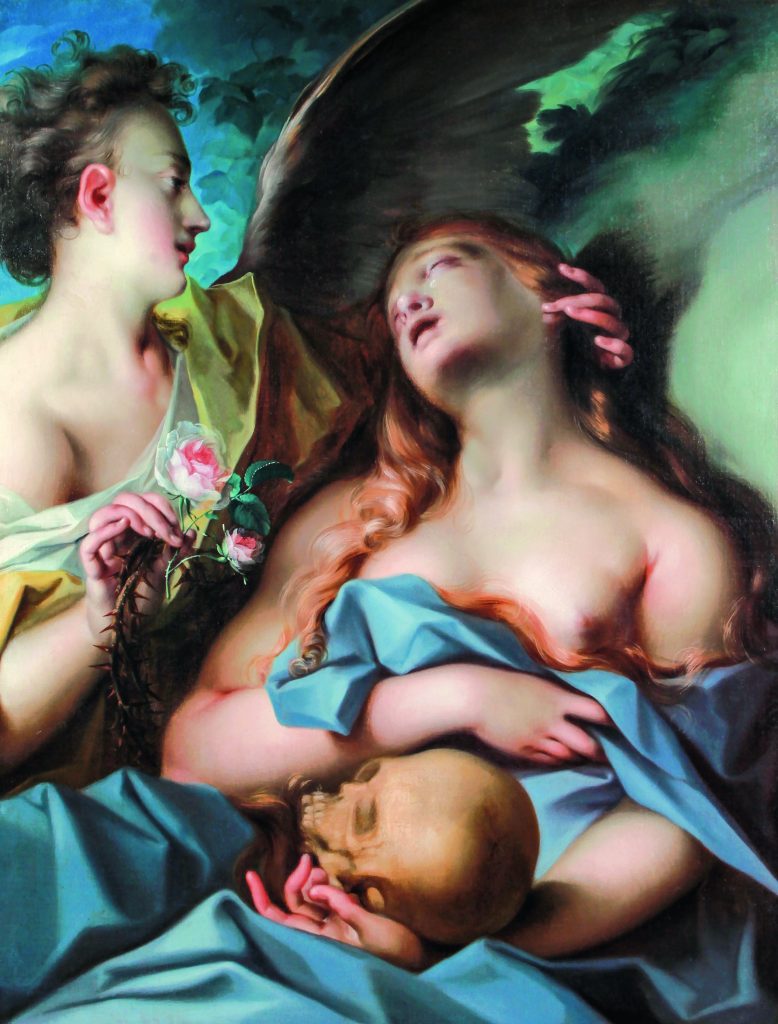
Ignaz Stern, known as Ignazio Stella, Maddalena in estasi e un angelo (Mary Magdalene in Ecstasy and an Angel), c. 1725. Oil on canvas, 90 × 69.7 cm.
Image Courtesy of Fondazione Cavallini Sgarbi
In this chromatic atlas, two hues reign supreme, bearing the heaviest and most complex meanings linked to the female gender.
- Scarlet red never leaves the scene. Present in countless shades, particularly the scarlet variant, it carries a stratified symbolic load. According to biblical tradition, scarlet red is indissolubly associated with the idea of sin, and simultaneously with blood, and thus with suffering and pain. In canvases and cultural narratives, well represented by the exhibition’s paintings, this color transforms the woman into a tragic and monumental entity: not only the custodian of original guilt, but also a creature traversing physical and existential pain. Yet, right within this wound lies her greatness. Scarlet red simultaneously embodies unmatched strength and power: it is the emblem of an indomitable energy, of a passion that burns the rules, and of inner sovereignty. In works from various epochs, a scarlet gown is tasked with magnetizing the gaze, reminding us that a woman is never a mere ornament, but the active, magnetic, and proud pivot of the narrative.
- Alongside red, bright azure plays a fundamental role. Today sometimes confined to childhood stereotypes, deep and brilliant azure enjoyed immense spiritual nobility: it was the quintessential color of choice for the Virgin Mary. In sacred and profane iconography, azure evoked celestial purity, infinity, immaculate protection, and an elevated, almost frigid spirituality that balanced the earthly, painful fire of red.
Beyond Time: A Legacy of Power and Grace
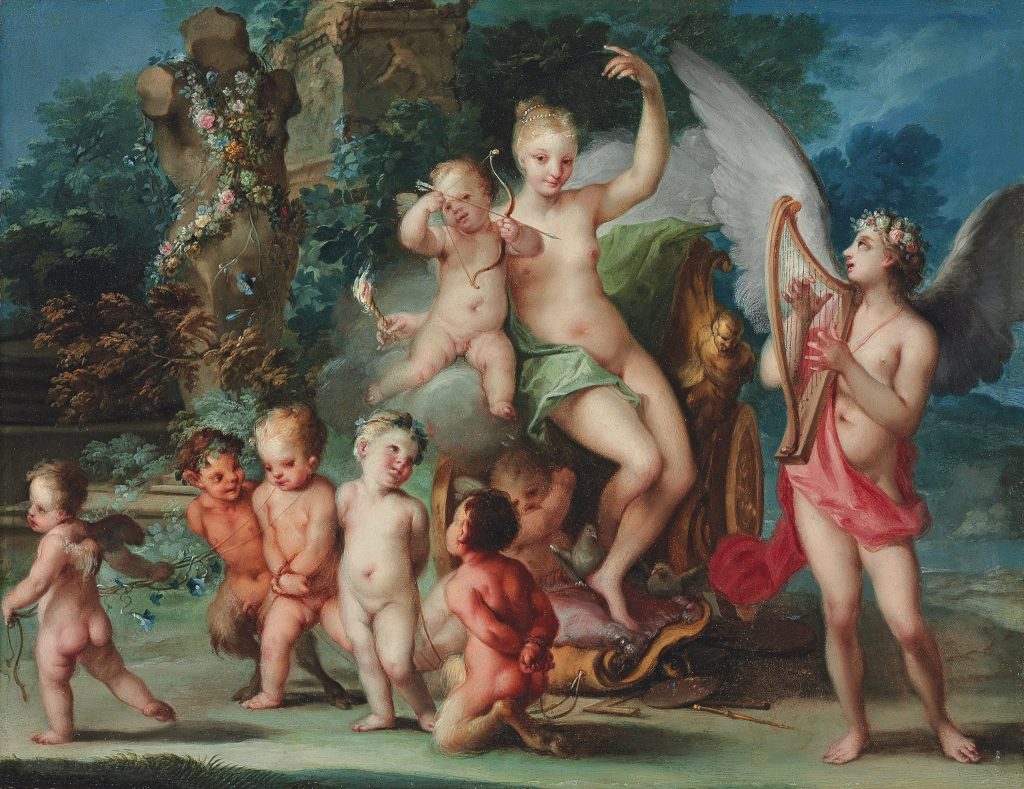
Ignaz Stern, known as Ignazio Stella, Trionfo di Venere (Triumph of Venus), c. 1725. Oil on copper, 28 × 35.5 cm.
Image Courtesy of Fondazione Cavallini Sgarbi
Tracing how the centuries have painted women means rediscovering a richness that contemporary culture has often sacrificed on the altar of homogenization. Generous bodies and vibrant colors return the image of a multiform feminine, in which power, pain, and fragility do not exclude one another, but coexist in perfect balance.

