
The Global Mirror: Navigating the Complex Kaleidoscope of Modern Beauty and Its Psychological Implications


An Image Consultant’s Manifesto in the Digital Era
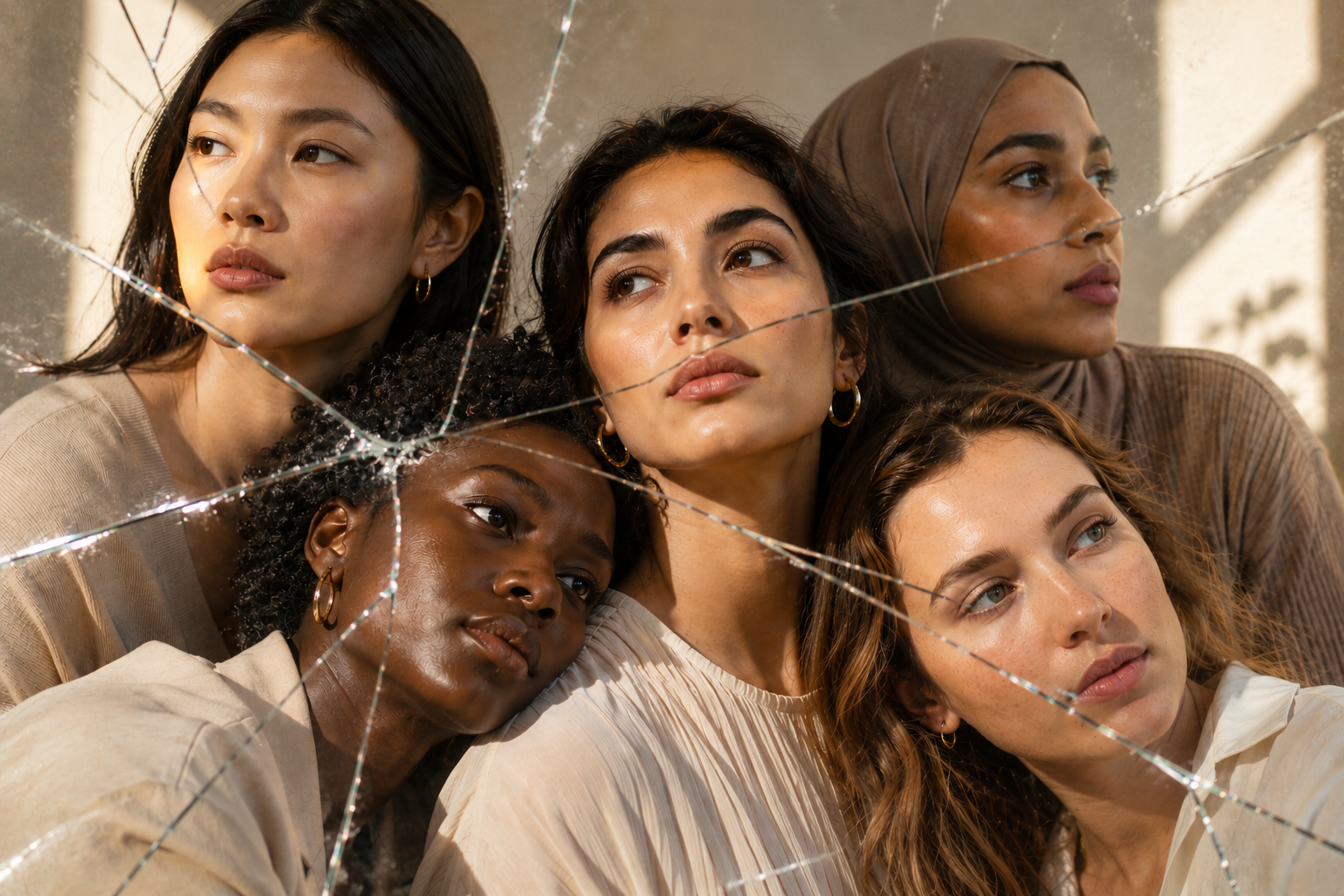
As an image consultant, my workspace is a sanctuary, a place where people come to define, refine, and celebrate their external selves. Yet, day after day, I find myself not just managing wardrobes or palettes, but navigating the tumultuous currents of identity. I sit across from clients from every corner of the globe, and I am struck by a recurring, unsettling realization: we are living in an era where the mirror has become a fragmented glass, reflecting a standard that feels increasingly disconnected from the rich, historical tapestries of who we actually are.
A Heritage of Aesthetics: The Roots of Idealization
To understand where we are, we must look at where we come from. Beauty has always been a language of cultural survival, spiritual signaling, and social hierarchy.
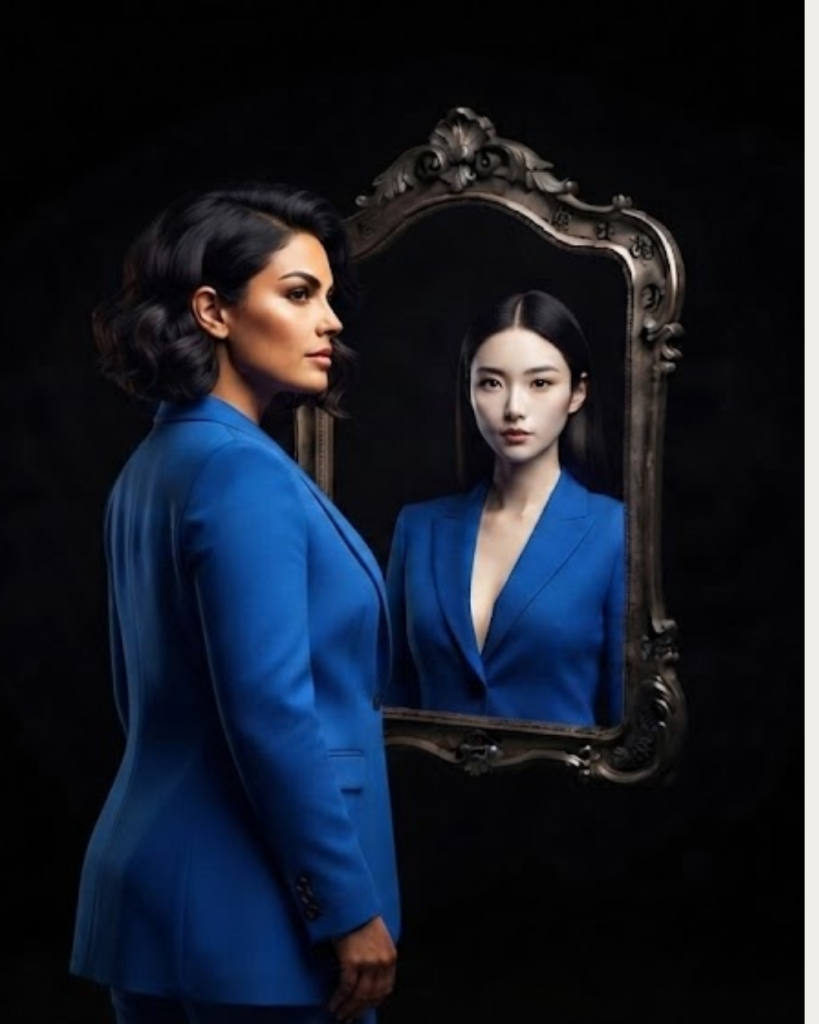
Consider the Korean beauty standard, often characterized by porcelain-pale skin and a V-shaped, pointed chin. Historically, pale skin was the ultimate marker of class; it signaled that one did not have to toil in the fields in the sun. It was a sign of nobility and leisure. The preference for a delicate, pointed chin, and the associated “glass skin” aesthetic, is a modern evolution of these traditional notions of refinement and youth, now amplified by the meteoric rise of K-beauty (“Korean Beauty” is an umbrella term for skincare and cosmetic products derived from South Korea, Editor’s note).
AI-Generated by Dr. Manuela Pirola
In contrast, look to the Middle East and North Africa. Here, the eyes have historically been the focal point of beauty. The tradition of kohl dates back to Ancient Egypt, originally used not just for aesthetics, but as a practical shield against the harsh glare of the desert sun and as a prophylactic against eye infections. Today, the emphasis on heavily defined, expressive eyes remains a powerful cultural signature, reflecting a tradition where the eyes are seen as the “window to the soul,” especially in contexts where modesty codes might emphasize the face.
In these same African and Middle Eastern cultures, a curvier, fuller silhouette has traditionally been celebrated as the ultimate symbol of health, fertility, and prosperity. In times where food security was not guaranteed, a rounded figure signaled wealth and the capacity to sustain life. It is the antithesis of the Northern and Western “waif” aesthetic (in the digital era, a fashion and cultural subculture characterized by an extremely slender, delicate, and often fragile physical appearance, Editor’s note), which historically favored a leaner, more ethereal look, often influenced by European aristocratic ideals of fragility and distinct, angular features.
Then there is the Mediterranean aesthetic: a celebration of the “golden ratio,” sun-kissed, glowing skin, and thick, expressive hair. This look was historically rooted in the vitality of the environment, the Mediterranean sun, the vibrant coastal life, and a culture that equates beauty with joie de vivre and robust health.
And we cannot forget the Māori moko kauae (chin tattoos). For Māori women in New Zealand, this is a sacred taonga (treasure). The intricate carvings represent the wearer’s whakapapa (genealogy) and status. It is an aesthetic of endurance and pride, carved into the skin to signify that the internal and external are one, a direct rejection of the idea that beauty must be “smooth” or “unmarked.”
The Rise of the “Instagrammable” Uniform
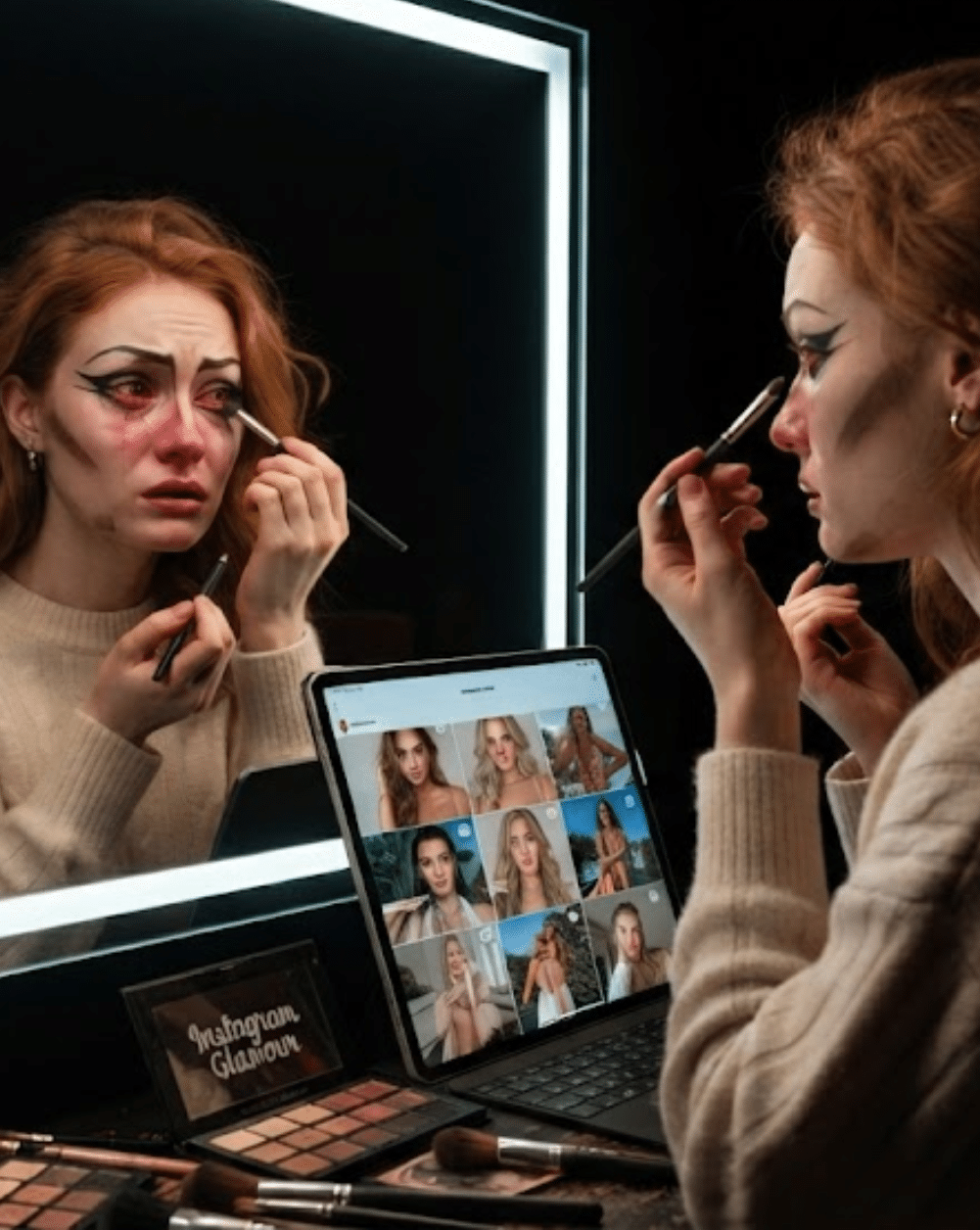
Fast forward to today, and we are witnessing the aggressive force of globalization. We have entered the era of the “Instagram face,” a homogenized aesthetic characterized by the same high cheekbones, snatched noses, and hyper-smooth textures. Algorithms do not care for cultural nuance; they favor high-contrast, repeatable patterns that perform well on a screen.
AI-Generated by Dr. Manuela Pirola
As an image consultant, I see the damage this does. We are trending toward a “universal” beauty that is, in reality, a digital construct. I see women from Seoul to Casablanca trying to fit their unique, ancestral features into the same digital template. We are trading the depth of cultural lineage for the shallow ease of an aesthetic that can be duplicated with a tap of a finger.
The Mirror Crack’d: When Heritage Becomes a “Flaw”
This is where my work becomes a battleground. I am constantly working with brilliant women who look in the mirror and see “defects” where I see cultural legacy.
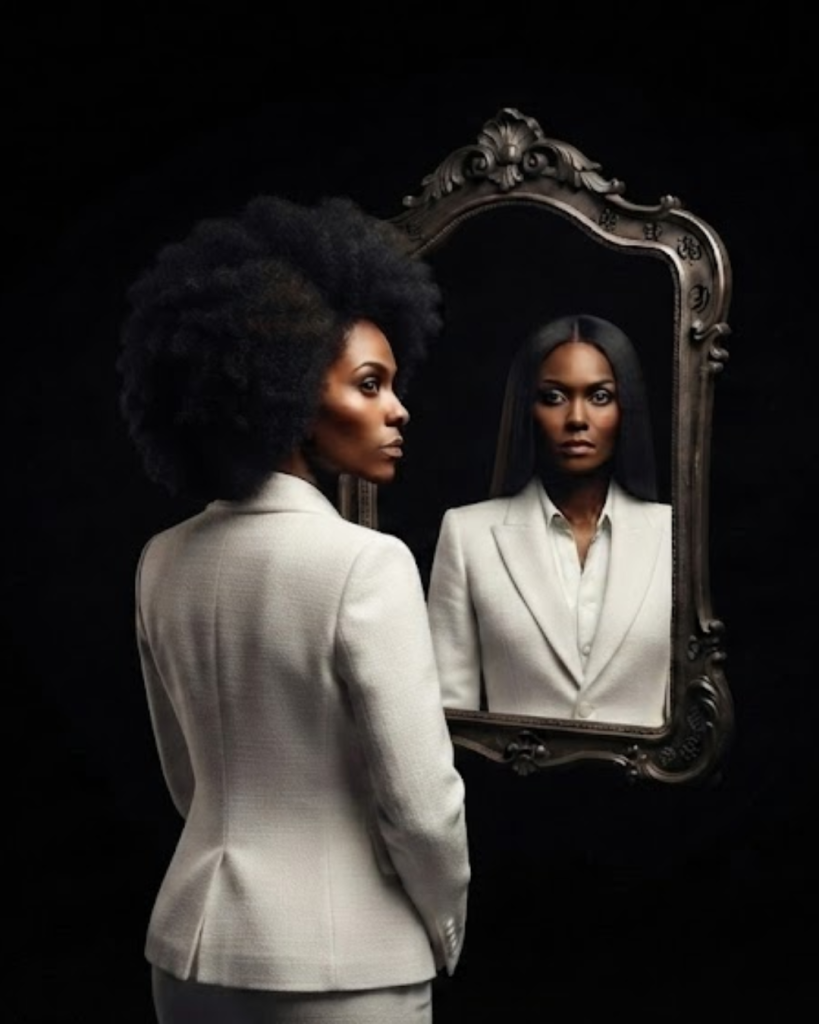
The most poignant example is the ongoing struggle with Afro-textured hair. Despite the slow progress of legislation like the CROWN Act (“Create a Respectful and Open World for Natural Hair” is a legislative movement that prohibits race-based hair discrimination in workplaces and public schools. It expands the definition of race in civil rights laws to protect natural hair textures and protective styles like braids, locs, twists, etc., Editor’s note), I still have clients, highly successful, boardroom-ready women, who feel their natural hair is “unprofessional.” They have been conditioned by a corporate culture that equates “neatness” with Eurocentric standards: straight, flat, and restrained. When a woman spends years hiding her natural texture to fit into a corporate box, she is not just changing her hairstyle; she is actually severing a connection to her identity.
AI-Generated by Dr. Manuela Pirola
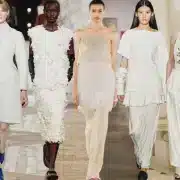
The same dissonance occurs everywhere. I consult with African women who feel pressure to “Westernize” their peculiar flat nose shapes, or East Asian women who are told that their natural eye shape needs “correction” through surgery. They are being told, implicitly and explicitly, that their features are “problems” to be solved rather than characteristics to be honored. Even the curvy woman, traditionally a symbol of prosperity in her culture, now looks in the mirror and sees “weight” that needs to be “managed” because it doesn’t align with the lean, athletic Instagram ideal.
Reframing the Consultation
My role as an image consultant is changing. It is no longer just about color analysis; it is about decolonizing the mirror.
When a client points to a feature they want to “fix,” I stop. We talk about the history of that feature. We analyze why society tells them that their natural self is “corporate-incompatible.”
True style is not about reaching an impossible, homogenized ideal. It is about the bold, unapologetic reclaiming of our heritage. It is about understanding that a Māori woman’s moko is a history book, not a deviation from beauty. It is about knowing that a fuller figure is a symbol of vitality, not a failure of discipline.
As we move forward, the most fashionable choice we can make is to resist the flattening effect of globalization. We must look at our faces and bodies not as clay to be molded for a screen, but as artifacts of a unique, vibrant, and non-negotiable history. The most beautiful person in the room is not the one who looks the most like their filter; it is the one who has the courage to look exactly like themselves.
As a professional in this field, I find myself curious: when you stand before your own mirror, what is the one “flaw” you have been taught to dislike that you are finally ready to embrace as a piece of your own cultural identity?

