
Boop Beyond the Bow


How Betty Boop Became a Beauty, Fashion, and Cultural Archetype
There are certain women in culture whose image becomes larger than the moment they were created in. Their silhouette remains recognizable even when their story evolves, shifts, and is reinterpreted through generations. Betty Boop is one of those figures.
Long before beauty trends circulated through social media and long before runway looks were endlessly archived online, Betty Boop existed as an instantly recognizable aesthetic language. The softly sculpted curls. The exaggerated eyes. The tiny cupid’s bow mouth. The confidence. The playfulness. The performance of femininity itself.
Created in 1930 through Fleischer Studios, Betty Boop entered American culture during a moment shaped by jazz, performance, film, glamour, and dramatic social change. Originally appearing in the animated short Dizzy Dishes, Betty began not as the fully formed icon we recognize today but as an evolving character influenced by the visual culture and performers surrounding her era.
Her look became associated with the Jazz Age flapper. Historians often point to entertainer Helen Kane as a visual and vocal influence, particularly through Kane’s signature performance style and famous “Boop Oop a Doop” phrasing. Yet Betty’s story becomes more layered when discussions turn toward where those performance traditions originated.
That conversation leads to another name that has increasingly become part of discussions surrounding Betty Boop’s cultural history: Esther “Baby Esther” Jones. Jones was a Black child performer whose vocal phrasing and rhythmic scat style entered public conversation decades ago during legal proceedings connected to Betty Boop’s origins. While historians continue to separate direct visual inspiration from performance influence, the conversation itself reveals something larger. Culture rarely arrives from a single source. Fashion, beauty, music, and image are constantly built through exchange, reinterpretation, and visibility.
That complexity feels especially meaningful to revisit on Juneteenth. Because when we talk about beauty icons, we are also talking about whose influence becomes visible and whose influence becomes harder to trace over time.
Betty Boop’s image eventually became its own visual category. Thin arched brows. Short sculpted curls. Dramatic lashes. Circular blush placement. Defined lips. Today these choices feel editorial. In the early twentieth century they represented something bolder. Betty embodied a version of femininity that felt theatrical, flirtatious, expressive, and intentionally seen.
Her beauty language did not disappear with animation. Look closely and echoes of Betty’s world continue appearing throughout fashion and beauty history.

Josephine Baker Archival Portrait ; Image Source: This image features Josephine Baker, a renowned American-born French entertainer, World War II spy, and civil rights activist. The portrait was taken by Studio Harcourt in 1940.
The sculpted finger wave and short cropped silhouettes associated with performers like Josephine Baker created an entirely different but equally iconic visual identity during the same era.
Beauty has always borrowed. Fashion has always remembered.
Even today, runway beauty frequently returns to exaggerated femininity, doll-like finishes, lacquered skin, tiny mouths, graphic lashes, and theatrical eyes. Makeup artist Pat McGrath has repeatedly shown how historical references can become modern again through couture beauty looks that feel cinematic, polished, and slightly surreal.

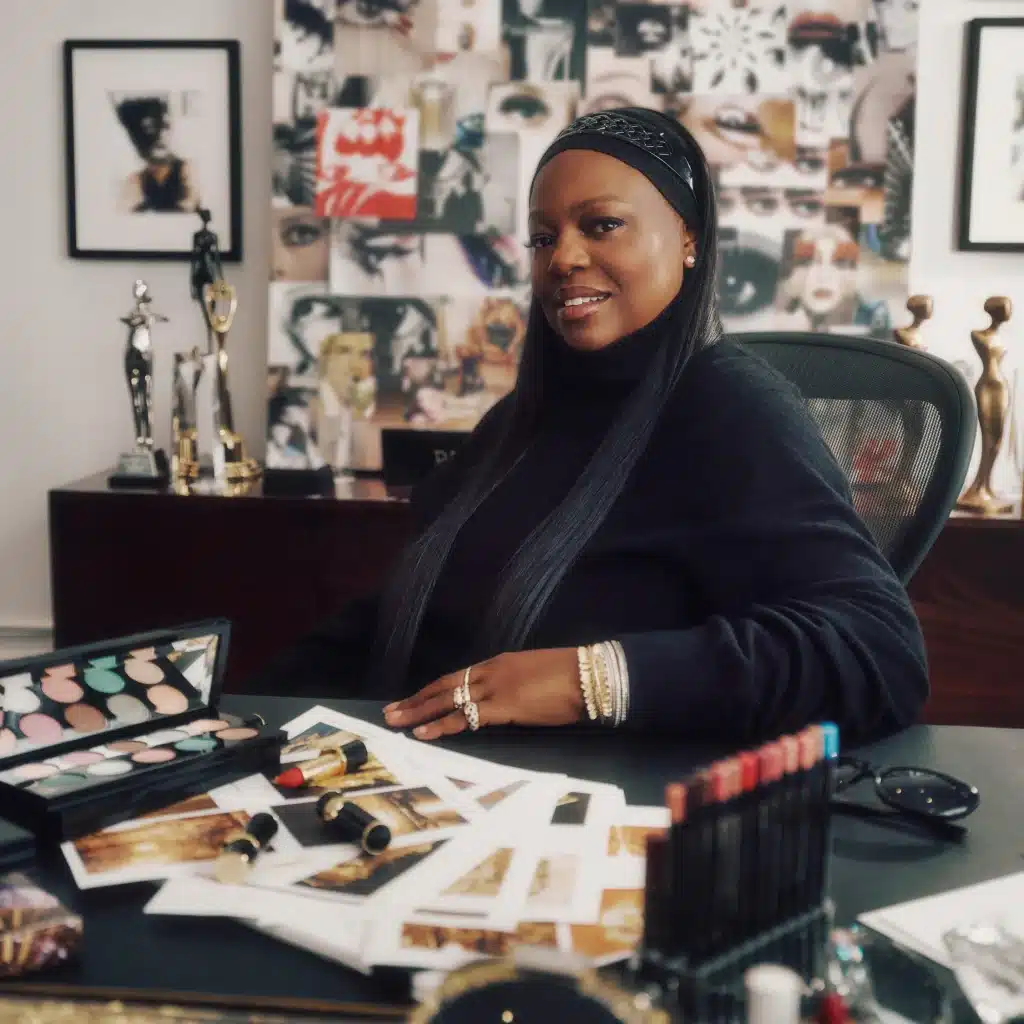
Left : Pat McGrath Runway Beauty Close-Up & photo. Collage- The provided image is a collage by Ashley Peña celebrating the legendary runway makeup artistry of Pat McGrath, often referred to as “Mother” in the fashion industry. Right : Photo of Pat McGrath ; This image shows famed makeup artist, Pat McGrath, in her office, photographed by Micaiah Carter for a “Glamour Women of the Year” feature.
Fashion does this constantly. A makeup reference becomes a runway moment. A runway moment becomes an editorial. An editorial becomes a campaign. Then years later someone discovers the original image and realizes none of it was entirely new.
That may be why Betty Boop continues to resonate. Not because she stayed frozen in time. But because she became a visual vocabulary.
The most interesting thing about a beauty archetype is that it never stays in one era.
Once an image enters culture, it becomes available for reinterpretation.
Betty Boop’s influence can be traced not only through animation and costume but through the way fashion repeatedly returns to certain visual codes. The cropped silhouette. The intentional curl. The expressive eye. The tension between innocence and confidence. The idea that beauty itself can become performance.
Perhaps one of the clearest examples is the continued fascination with shorter hairstyles and sculpted silhouettes throughout fashion history.
The pixie cut in particular has lived many lives.
While Betty Boop herself wore a stylized curled bob rather than what we now define as a pixie, the spirit of abbreviated femininity she helped popularize continued across decades.

Modern Pixie Haircut Editorial Collage Image Source. This image showcases a curated collage of various Black women featuring diverse and stylish short pixie cut hairstyles on https://www.lemon8-app.com/feed/foryou?region=us.
Josephine Baker became known for her sculpted finger waves. Decades later, Twiggy transformed cropped hair into fashion iconography. Today artists continue revisiting these silhouettes.
Runway beauty tells a similar story.
Fashion often looks forward, yet frequently pulls from the archive.
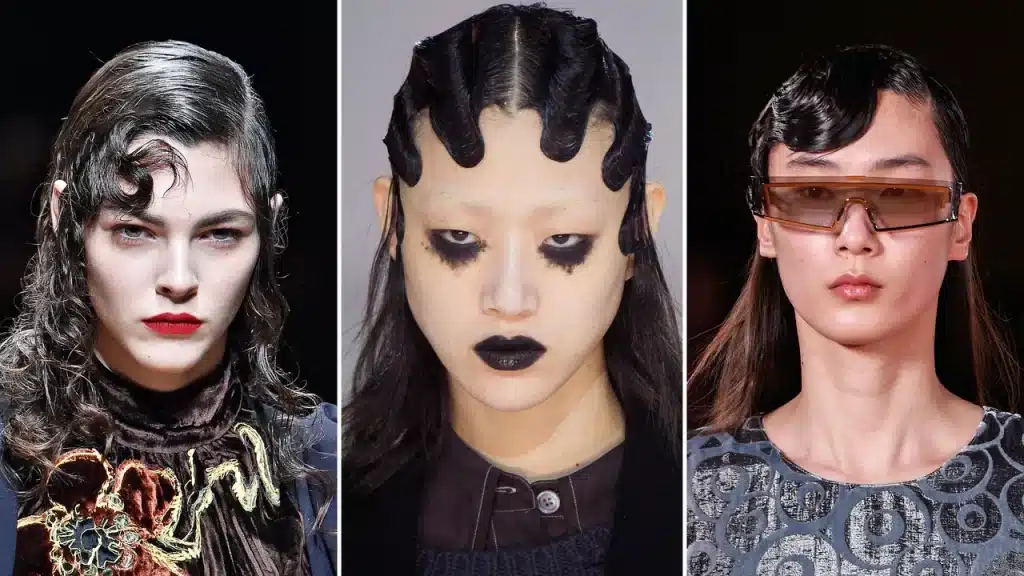
Runway Beauty Reference Image Source for Finger Waves. This striking visual showcases the iconic, goth-glam runway beauty from the Marc Jacobs Fall/Winter 2016 Ready-to-Wear fashion show. The Hair: Styled by legendary hair stylist Guido Palau, the models wore high-shine, sculpted postmodern finger waves plastered flatly against the head.
Makeup artist Pat McGrath continues transforming historical references into modern beauty moments, exaggerating eyes, reshaping proportion, and turning makeup into character.
The oversized gaze. The precise mouth. The theatrical finish. Beauty communicates before garments do.

Betty Boop Fashion/Beauty ; Image Source. This image shows a winning design from Project Runway All Stars Season, Episode 6, titled “Thrown for a Loop by Betty Boop.” The outfit was created by designer Joshua McKinley.
That may be why Betty Boop continues appearing long after her era ended. Not because culture stayed the same. But because every generation finds a new way to wear the reference.
Fashion asks us to look forward. History asks us to look back. The most meaningful stories allow us to do both.
What's Your Reaction?

