
Building a Museum, Building a Nation


What if Australia’s most ambitious cultural project isn’t the building, but the people building it?
Museums are usually measured by what they contain. Their collections. Their exhibitions. Their architecture. Long before visitors step through the doors, the conversation tends to revolve around the building itself. Who designed it? How much did it cost? How large is it? What will it hold?
Powerhouse Parramatta invites a different question: what if the most important part of a museum is not the building, but the people who shape it?
That question sits quietly beneath the announcement that more than 50 designers, architects, makers, landscape architects, fabricators, and creative practitioners from across Australia have been commissioned to contribute to the new museum. On paper, it reads like a design initiative. In reality, it feels closer to a cultural manifesto.
The easiest way to build a museum is to commission a building. The harder task is to commission a culture, and Powerhouse Parramatta appears to be attempting exactly that. Rather than placing authorship in the hands of a single designer or institution, the project has embraced a collective approach. Furniture designers, lighting specialists, landscape architects, Indigenous cultural advisors, interior designers, fabricators, graphic designers, craftspeople, and makers have all been invited into the conversation. The result is not simply a museum. It is an ecosystem, and that distinction matters because culture has never been the product of a single voice.
The cities we celebrate as cultural capitals were not imagined by one architect or one artist. They emerged through accumulation, through layers of ideas, generations of makers, and a continuous exchange between people, place, and time. Culture is built collectively, and Powerhouse Parramatta seems to understand this instinctively.
The scale of the project alone is remarkable. Designed by Moreau Kusunoki alongside Australian architecture firm Genton, the museum has been described as Australia’s largest cultural infrastructure development since the Sydney Opera House. It represents a significant shift in how cultural institutions are imagined and where they are located. Rather than reinforcing the idea that culture belongs exclusively in traditional city centres, the project places Western Sydney at the centre of the conversation.
That decision feels important because Western Sydney is one of Australia’s most diverse regions, shaped by generations of migration, Indigenous histories, entrepreneurship, creativity, and cultural exchange. It is a place where identities overlap rather than exist in isolation. Building a major cultural institution here feels less like an expansion and more like a recognition of a reality that has existed for decades.
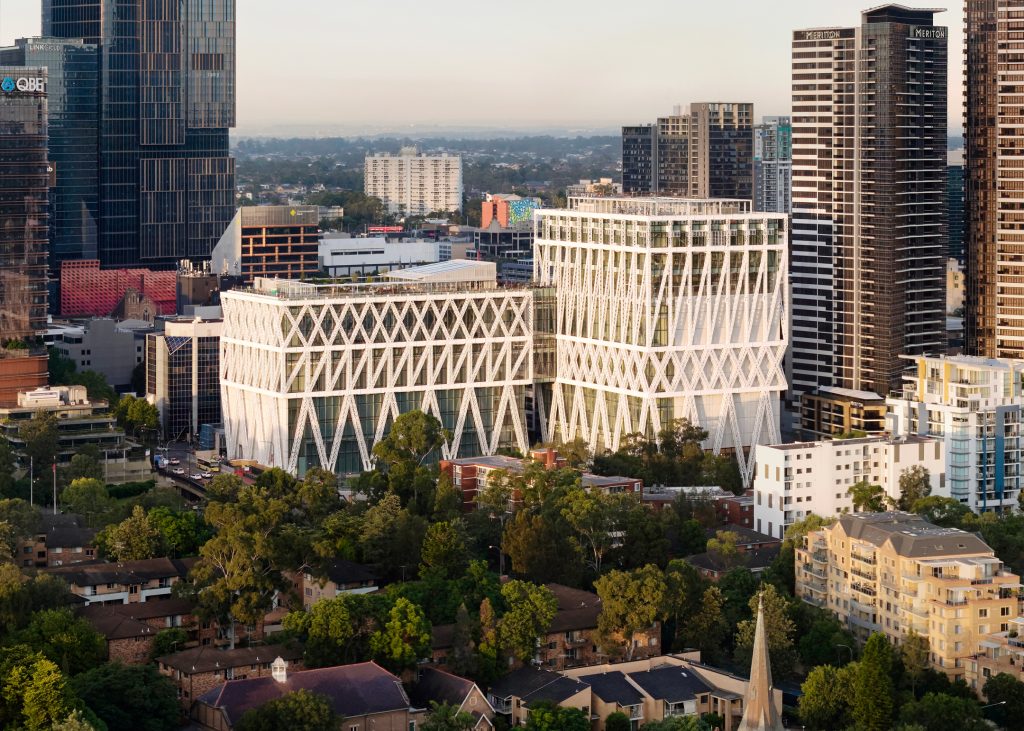
Powerhouse Parramatta Construction ; Image Source : Press Office
The commissioning programme reflects that same philosophy. Across the site, designers have been asked not simply to furnish spaces but to shape experiences. Landscape architects have reimagined the relationship between the museum and the Parramatta River. Indigenous knowledge systems have informed the design of public spaces. Makers and craftspeople have contributed furniture, interiors, educational environments, gathering spaces, exhibition infrastructure, accommodation, hospitality venues, and public-facing experiences.
The project brings together a remarkable cross-section of Australian creative talent, including George Livissianis, Adam Goodrum, Tom Fereday, YSG Studio, Fiona Lynch, Derlot and dozens of others working across architecture, interiors, product design, fabrication, landscape, lighting, hospitality, and public space. Yet what makes the initiative compelling is not the star power of the names involved. It is the collective nature of the undertaking itself.
Design is not being treated as decoration. It is being treated as culture. There is something refreshing about that approach. Too often, design is reduced to aesthetics, a final layer applied once the important decisions have already been made. Yet the spaces we inhabit shape how we gather, learn, interact, and remember. Design influences behaviour, experience, and ultimately how communities see themselves.
Powerhouse Parramatta appears to recognise that reality, which may explain why the list of contributors feels significant beyond the names themselves. Established figures sit alongside emerging voices, different disciplines intersect, and individual expertise becomes part of a larger narrative. The project begins to resemble a portrait of contemporary Australian creativity rather than a showcase of individual achievement.
And that may be the museum’s most compelling idea. Before a single exhibition opens, before a ticket is purchased, and before the first school group arrives, Powerhouse Parramatta has already become a platform for collaboration. It has transformed the act of building a museum into an act of cultural participation.
The institution will, of course, be judged by its exhibitions, collections, programming, and public impact. It should be. Yet one of its most meaningful contributions may already be visible. More than 50 designers have been invited to imagine what a museum can be, and the answer is beginning to look less like a building and more like a conversation.
Perhaps that is exactly what culture is.
What's Your Reaction?

