
She Left on Independence Day


I picked up my phone to do what most of us do far more often than we care to admit, a little scrolling before the day properly began, a quick look at what was happening in the world, and there it was.
Zeudi Araya had passed away.
I kept scrolling for another second before going back, not because I had misread it, but because I hadn’t. Then I saw the date: May 24, Eritrean Independence Day.
And I thought, wow. Of all days.
The thing about Zeudi Araya is that most Eritreans know her name before they know her story.
At least that was true for me.
Her name was always somewhere in the background. It appeared in conversations, old photographs, family stories, and those moments when Eritreans talk about people who somehow managed to leave their mark on the world. I knew she mattered long before I understood why.
When I finally learned her story, it made perfect sense.
Born in Dekemhare, Eritrea, Zeudi was crowned Miss Eritrea in 1969, a title that would ultimately change the course of her life. A trip to Italy led to a commercial. The commercial led to an introduction. The introduction led to director Luigi Scattini, who cast her in La Ragazza dalla Pelle di Luna. What followed was a career that would place her among the most recognizable African-born actresses in Italian cinema.
Looking back now, it all feels wonderfully cinematic.
A young woman leaves Eritrea. An unexpected opportunity appears. One door opens, then another. Before long, she is starring in films, appearing on magazine covers, and building a career few could have imagined when she first arrived in Italy.
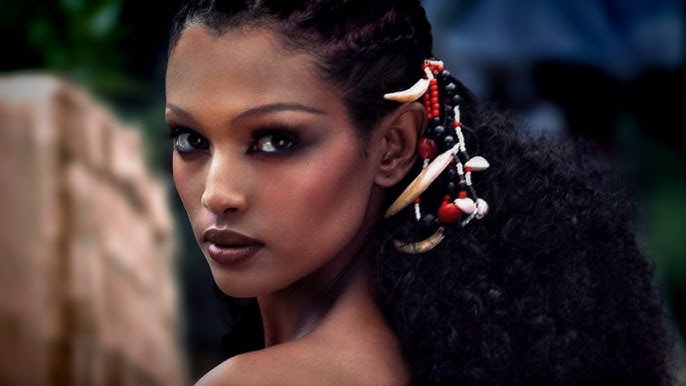
The conversation around Zeudi almost always begins with her beauty.
Fair enough. The camera loved her. Every photograph seems to confirm it. But beauty isn’t what kept people interested.
Beauty may open the door. Presence is what keeps people in the room.
Zeudi had presence.
She carried herself with a confidence that felt completely natural. Nothing about her seemed forced. Even today, decades later, you can look at her photographs and understand why audiences were captivated. She wasn’t trying to command attention. She simply did.
What I admire most is that she built her career during a very different era.
Today, visibility comes easily. We have platforms, followers, algorithms, and audiences available at the touch of a screen. Back then, none of that existed. Opportunities were fewer, industries were smaller, and expectations were often rigid.
Success required a different kind of persistence. It required showing up. Again and again.
And finding a way to stay in the conversation. Zeudi did exactly that.
Over the years she appeared in dozens of films and eventually married legendary Italian producer Franco Cristaldi, one of the most influential figures in Italian cinema. Their partnership became part of film history, but by then she had already established herself as a star in her own right.
As I found myself reading more about her life this week, I kept returning to a simple thought.
What must that journey have felt like?
To leave Dekemhare and find yourself in Rome. To move between cultures, languages, and worlds. To build a life that stretched across two countries while remaining connected to both.
Perhaps that is why so many Eritreans felt a connection to her.
Her story was uniquely her own, yet parts of it felt familiar. Movement. Migration. Adaptation.
The balancing act of carrying one place in your heart while building a life somewhere else.
Many of us understand that feeling.
Eritrea occupies a curious place in the world’s imagination. Mention Paris, London, or New York and people instantly have a picture in their minds. Mention Eritrea and the conversation often begins with an explanation.
Where is it? Tell me about it. What’s it like?
For decades, Zeudi Araya answered those questions without saying a word.

She simply existed on a larger stage and gave people a reference point.
An Eritrean actress. An Eritrean beauty queen. An Eritrean woman making her mark in international cinema.
Sometimes that is enough.
Reading about her life now, I realize that what she leaves behind is much bigger than a filmography.
She leaves behind a story. Not the polished version that appears in biographies, but the human one. A young woman from Dekemhare who took a chance. A woman who built a remarkable career far from home. A mother. A wife. A public figure who remained part of Eritrea’s collective memory even while living abroad.
And perhaps that is why the news felt different.
It felt different because people like Zeudi become part of the furniture of our lives. Their names are always there. Their stories become woven into the stories we tell about ourselves.
You assume they will always be around. Until one day they aren’t.
Zeudi leaves behind her son, Michelangelo, a remarkable body of work, and a legacy that stretches across Eritrea and Italy. She also leaves behind something less tangible. A reminder that extraordinary lives often begin in ordinary places.
And so I find myself returning to that date one last time.
May 24. Eritrean Independence Day.
A date already filled with memory and meaning.
Now it carries one more story.
The story of an Eritrean woman who left home, conquered Italian cinema, and became one of the most recognizable faces her country has ever produced.
Of all days. She left on Independence Day.
What's Your Reaction?

