
The Future of Design Has a Long Memory

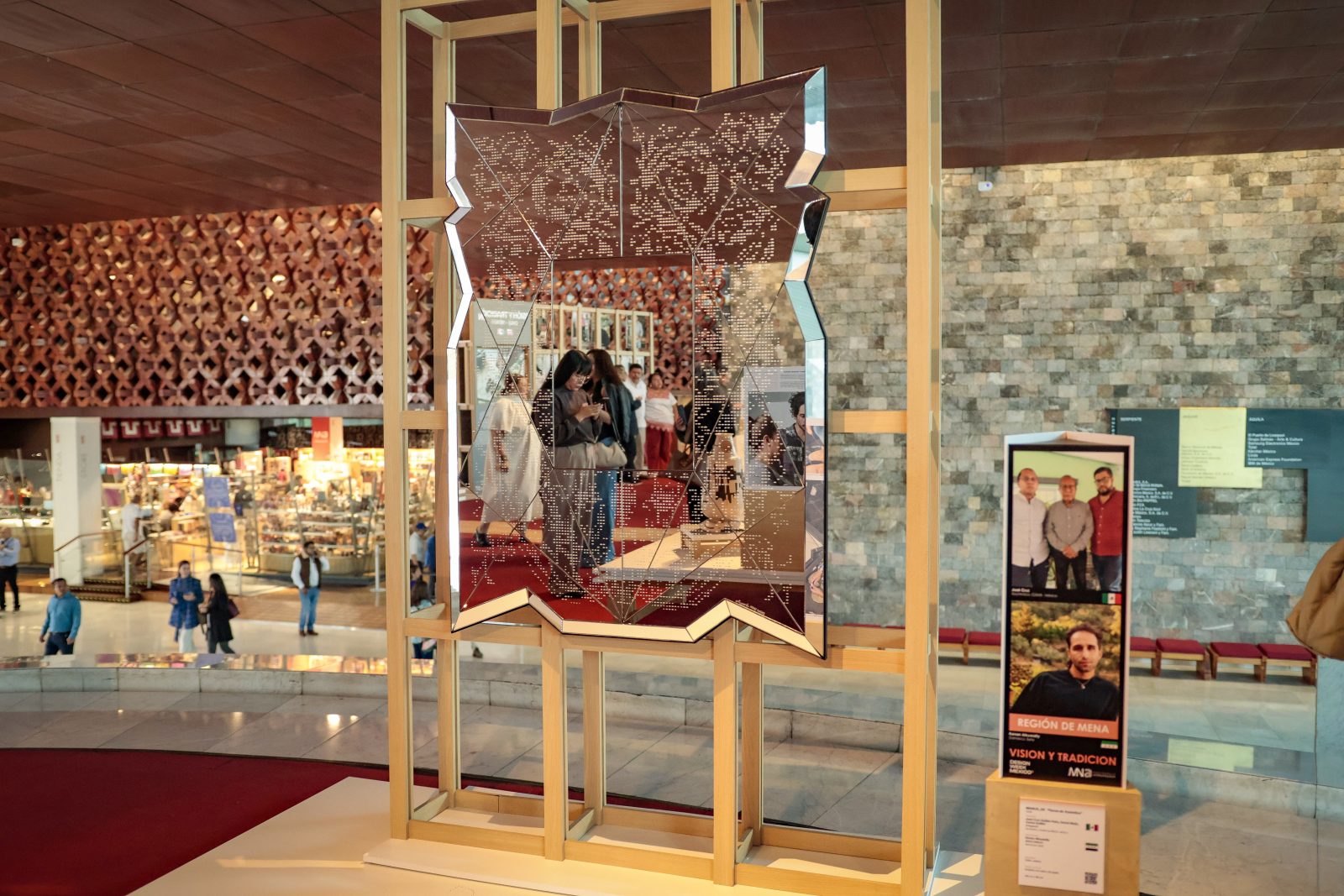

From Mexico City to Doha, a new generation of designers and master artisans is reconsidering who creates, who receives recognition and why cultural knowledge matters to the future of design.
There is a particular intelligence in the human hand, one that develops through years of working with materials, understanding their resistance, recognising their possibilities and learning when to intervene and when to leave something alone. It is an intelligence that rarely receives the same recognition as the designer’s original concept, although without it, many of the objects we celebrate would never exist.
This question of whose knowledge we value, and whose contribution we recognise, sits at the heart of Visión y Tradición, the exhibition that opened on 8 October at Mexico City’s National Museum of Anthropology as part of Design Week Mexico.
Presented under the 2026 theme “Perspectives from the Global South,” the exhibition brings together international designers and Mexican master artisans, including four collaborations developed through Crafting Design Futures, a residency initiated by Design Doha under Qatar’s Years of Culture programme.
The exhibition arrives at an interesting moment for the international design community. As technology accelerates production and digital tools make it possible to conceive increasingly complex objects in remarkably little time, there is renewed interest in forms of knowledge that cannot be acquired through software or replicated simply by studying a finished product.
Craftsmanship, in this context, becomes a serious conversation about cultural continuity, creative ownership and the future of making.
And perhaps the most important aspect of this exhibition is that the designers were not invited to Mexico simply to observe traditional techniques or borrow their visual characteristics. They were expected to work alongside the people who have spent years, sometimes generations, developing them.
That distinction deserves our attention.
When the Artisan Becomes a Co-Author
At the centre of Crafting Design Futures are four collaborations, each bringing a different cultural vocabulary into conversation with a Mexican craft tradition. Their significance lies as much in the working relationships as in the objects they have produced.
Syrian designer Kenan Alkuwatly worked with master glass engraver José Cruz, whose relationship with glass began at the age of twelve in his father’s and uncle’s workshops. By seventeen, Cruz had become a master of pepita engraving, a technique that creates small, seed-like impressions across the glass surface.
Alkuwatly’s interest in Arab architecture, ornament and material culture found an intriguing counterpart in Cruz’s knowledge of Mexican engraving. Across both traditions, pattern has long served purposes beyond decoration, carrying associations with place, identity and memory. Their collaboration offers an opportunity to consider how visual languages from different regions might inform one another without losing their individual histories.
For Lebanese multidisciplinary artist Shirine Sbaiti, the exchange took place through clay. Working with ceramic artisans Norberto y Rosi, whose practice includes painted decoration and sgraffito, a technique that reveals contrasting layers beneath a surface, Sbaiti brought the sculptural vocabulary of her practice, LimbObject, into conversation with Mexican ceramic traditions.
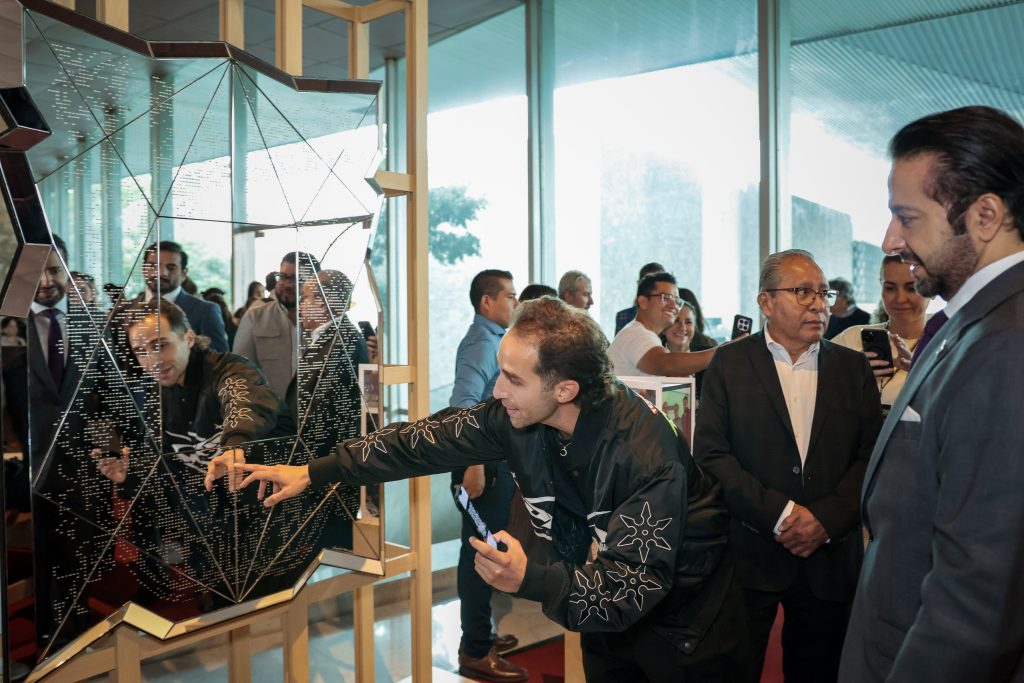
Image Source : Press Office
Her work often incorporates human limbs as structural and expressive elements, challenging familiar distinctions between furniture, functional objects and figurative sculpture. In this collaboration, the material knowledge of the artisans became part of that exploration, allowing established techniques to participate in the development of contemporary forms.
Yasamin Shaikhi, an Iranian designer based in Qatar, partnered with Estudio Guerrero, whose work combines glazed, majolica-type ceramics with decorative applications of alpaca, a white metal alloy. Shaikhi’s practice examines material innovation, memory and the possibilities of overlooked substances, making this collaboration particularly interesting for its emphasis on experimentation.
Here, ceramic and metal are more than materials selected to realise an existing idea. Their properties, limitations and possibilities help determine what the final object can become.
The fourth collaboration brought British-Indian architect and designer Armaan Bansal together with Alan Pureco’s family workshop, which represents more than three generations of copper craftsmanship.
Hand-hammered copper carries a distinctive relationship between material and maker. Each strike requires judgement, and the resulting surface records the physical process of its creation. Working with a family workshop whose knowledge has been transmitted across generations introduces another dimension to contemporary design: the understanding that expertise is accumulated collectively, often long before an individual designer enters the conversation.
These four projects offer different interpretations of collaboration, but they also raise a question that extends well beyond the exhibition: when an object emerges from the combined intelligence of a designer and an artisan, how should its authorship be understood?
The answer has implications for design education, cultural institutions, commercial partnerships and the way creative work is presented to the public.
For decades, international design has often celebrated the individual creative director or designer while the contributions of specialist makers remained less visible. That hierarchy is increasingly being questioned, particularly as institutions reconsider the cultural and economic relationships behind the objects they exhibit.
Recognising an artisan as a creative partner means acknowledging that the act of making can transform an idea, rather than merely execute it.
The Global South Is Changing the Conversation
The choice of “Perspectives from the Global South” as Design Week Mexico’s 2026 theme offers an important context for these collaborations.
The Global South is neither a single geography nor a unified cultural identity. It encompasses societies with distinct histories, economies, artistic traditions and relationships to colonialism, industrialisation and international cultural institutions.
Yet the term has become increasingly relevant in discussions about who establishes cultural authority and whose knowledge is treated as central to contemporary creativity.
For a long time, much of the international design conversation was organised around established European and North American institutions, with other regions frequently introduced through the language of heritage, inspiration or traditional craft.
That distinction matters because it can place contemporary creative authority in one part of the world while positioning other cultures primarily as sources of materials, techniques and visual references.
The more interesting possibility is a design culture in which Mexico, Qatar and the wider MENASA region participate as intellectual and creative centres in their own right.
Design Week Mexico’s Visión y Tradición, now in its eleventh edition, has developed a platform for bringing contemporary designers into direct collaboration with Mexican artisans. Its continued development demonstrates how a locally grounded initiative can contribute to an international discussion without surrendering its relationship to place.
The wider context is equally important. Mexico’s craft traditions encompass extraordinary diversity, shaped by Indigenous knowledge, regional histories, family workshops and generations of experimentation. They cannot be reduced to a single national aesthetic, just as the design traditions of the Arab world cannot be represented by one ornamental vocabulary.
The value of an international residency lies in creating enough space for those distinctions to be understood.
A productive cultural exchange should allow participants to recognise similarities without overlooking differences, and to develop something new without treating inherited knowledge as an unrestricted resource.
That requires curiosity, humility and, importantly, a willingness to share creative authority.
Cultural Leadership Beyond the Exhibition
The Mexico City presentation forms part of a larger programme under the Qatar, Canada and Mexico 2026 Year of Culture, an initiative that connects cultural institutions, artists and communities through exhibitions, residencies, education and other forms of exchange.
Led by Qatar Museums under the chairpersonship of Sheikha Al Mayassa bint Hamad bin Khalifa Al Thani, Years of Culture has developed international partnerships since 2012, with an emphasis on relationships intended to continue beyond the designated cultural year.
The broader programme helps explain why this particular residency matters.
In Doha, Expanded Tradition, curated by Ana Elena Mallet, opens at M7 on 27 October, bringing together Mexican makers who are reinterpreting inherited techniques through contemporary practice. The exhibition examines processes involving materials and skills such as silver filigree, natural dyes, textiles and lacquerware.
Mexican chef Elena Reygadas is also bringing Panadería Rosetta to the Doha Design District, accompanied by handmade ceramics by Perla Valtierra, extending the conversation between craft and contemporary culture into gastronomy.
Meanwhile, Fernando Laposse’s The Sower is scheduled to open during the forthcoming Design Doha Biennale, which begins on 5 November.
Together, these initiatives suggest a broader understanding of cultural exchange, one that recognises relationships between food, design, architecture, material culture and everyday life.
For Qatar, this programming also sits within a longer-term investment in cultural infrastructure and the development of its creative industries.
The challenge for any country making such investments is ensuring that international cultural visibility translates into lasting opportunities for practitioners, institutions and communities.
An exhibition can introduce audiences to another culture, but a sustained partnership can create the conditions for knowledge, professional relationships and creative opportunities to continue developing.
That is where cultural leadership becomes particularly consequential.
It requires institutions to think beyond the immediate visibility of an event and consider what remains after the exhibition closes. Are new professional relationships being established? Are artisans gaining recognition and opportunities? Are emerging designers developing a more informed understanding of the communities with which they work?
These are the questions through which the longer-term value of initiatives such as Crafting Design Futures should ultimately be assessed.
The Responsibility of Making
The exhibition also enters a wider conversation about the preservation of traditional craftsmanship.
UNESCO’s framework for intangible cultural heritage makes an important distinction between protecting finished craft objects and safeguarding the skills and knowledge required to produce them.
Its emphasis is on enabling artisans to continue practising their crafts and transmitting their expertise to future generations, particularly within their communities.
This distinction is especially relevant to contemporary design, where traditional techniques are increasingly being rediscovered by luxury brands, architects and creative studios.

An object inspired by a centuries-old practice may be visually compelling, but the continued existence of that practice depends on people having the means, opportunities and encouragement to sustain it.
Cultural preservation cannot be separated from the livelihoods and agency of the people who carry that culture forward.
This introduces responsibilities for designers and institutions alike, including questions of fair compensation, attribution, the ownership of jointly developed ideas and the ways traditional knowledge is represented to international audiences.
The press material for Crafting Design Futures describes a residency built around listening and shared making, although it does not detail the commercial or intellectual-property arrangements governing the resulting works. Those are important considerations for the wider design industry, particularly as cross-cultural collaborations become more common.
What makes the programme’s stated approach promising is its recognition that an artisan’s expertise should be allowed to change the designer’s original thinking.
As Fahad Al Obaidly, Director of Design Doha, explains:
“Craft is not simply a means of producing a designer’s idea. It is knowledge in its own right.”
His observation touches on a fundamental shift in how we might understand creative value.
The designer brings a concept, a particular education and a perspective shaped by personal experience. The artisan brings technical intelligence, cultural memory and an intimate understanding of materials. Neither contribution needs to diminish the other.
When both are treated seriously, the resulting work can become more than a contemporary interpretation of a traditional object. It can establish a different way of developing ideas.
And in an industry increasingly concerned with innovation, perhaps that is a useful reminder that progress can also emerge from paying closer attention to knowledge we already possess.
What We Choose to Carry Forward
The most meaningful aspect of Visión y Tradición may ultimately be the relationships it encourages us to reconsider.
Between designer and artisan. Between cultural heritage and contemporary practice. Between the institutions that provide international platforms and the communities whose expertise makes those platforms worthwhile.
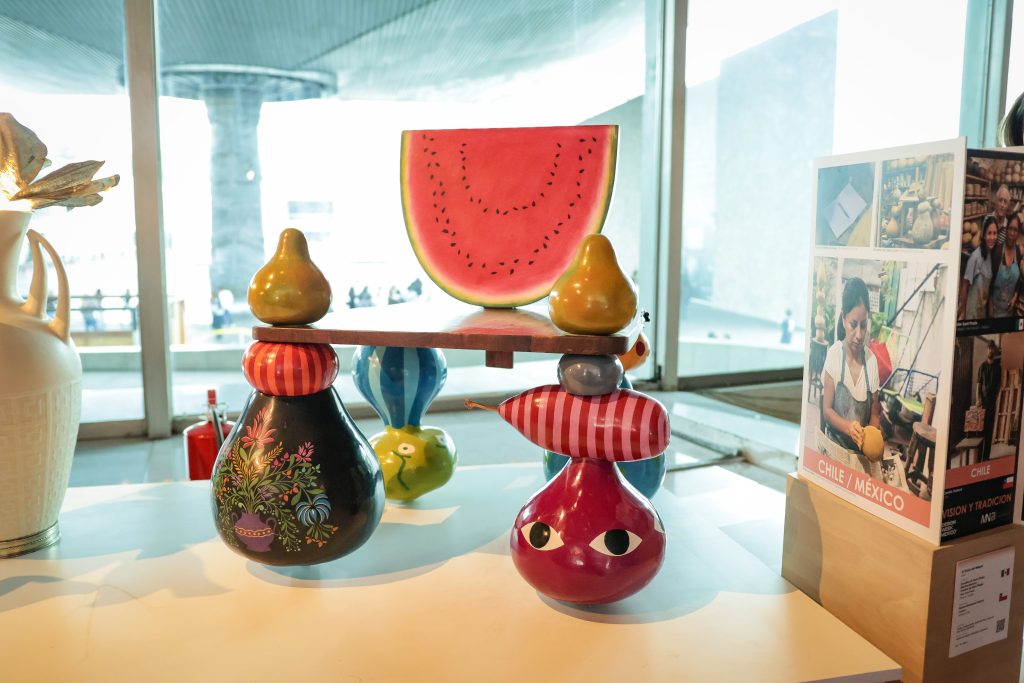
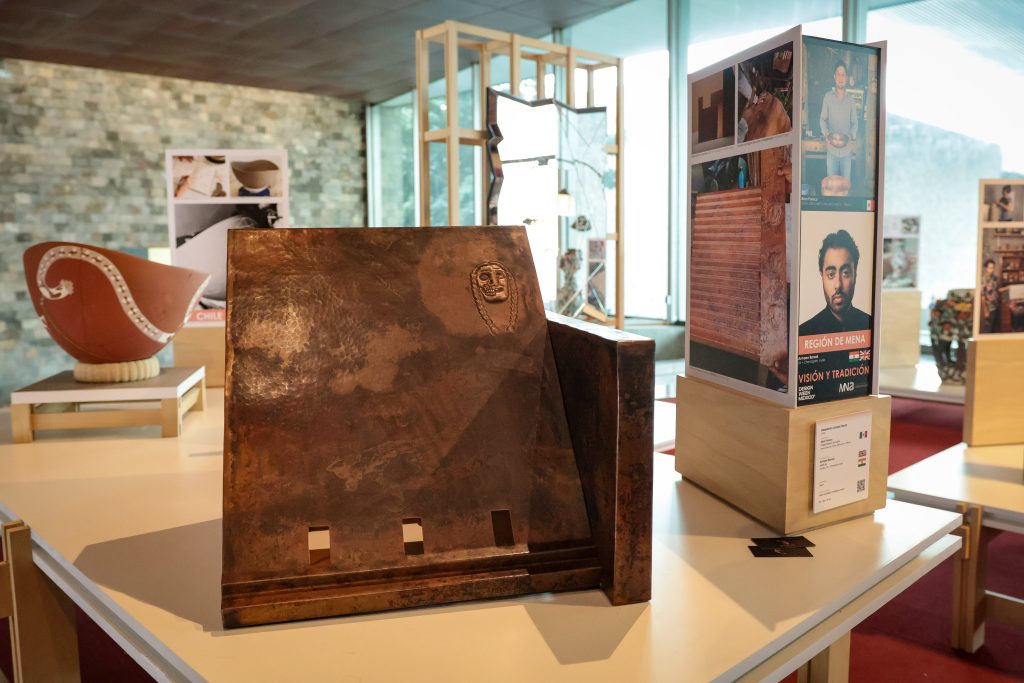
Image Source : Press Office
The exhibition also invites us to question the familiar assumption that the future of design must always be defined by new technologies, new materials or entirely new forms.
Technology will undoubtedly continue to transform the creative industries, expanding what designers can imagine and how objects can be produced. But technical advancement does not automatically produce cultural understanding, nor can efficiency replace every form of human knowledge.
The intelligence embedded in a piece of engraved glass, a ceramic surface or a hand-hammered copper vessel represents something accumulated through observation, repetition and experience.
Its relevance is not confined to the period in which the technique originated.
Traditional knowledge remains contemporary whenever people continue to practise, question and develop it.
For the international design community, that offers a valuable direction. The task is to create conditions in which inherited expertise can participate meaningfully in new creative work, with the people responsible for that expertise recognised as contributors to its future.
As the collaborations travel from workshops into the National Museum of Anthropology, they carry the histories of their makers, the conversations that shaped them and the decisions that emerged through working together.
Their significance will not be measured solely by the objects on display, but also by whether the relationships and opportunities created through the residency continue beyond it.
The future of design will depend, in part, on how thoughtfully we recognise the knowledge that brought us here, and how responsibly we choose to carry it forward.
Visión y Tradición is on view at the National Museum of Anthropology, Mexico City, from 8 October to 1 November 2026, as part of Design Week Mexico. The exhibition information and four collaborations are drawn from the supplied Years of Culture press release, with additional context researched from Design Doha, Years of Culture, Design Week Mexico and UNESCO.
What's Your Reaction?

