
When Does a Football Jersey Become a Fashion Statement?

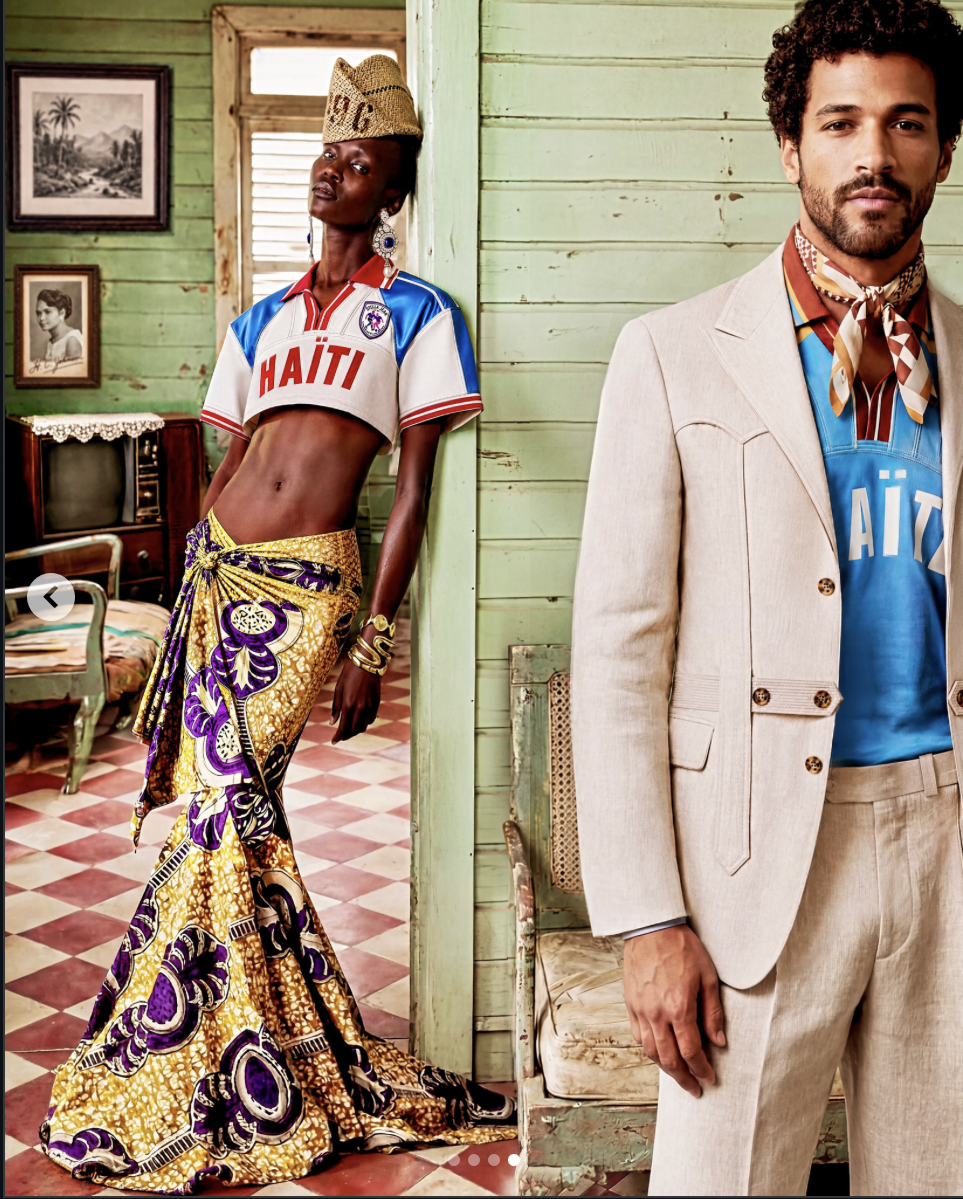

When does a football jersey stop being just something players wear on the pitch and become something people want to talk about, style, photograph, argue over, and keep?
That is the question Stella Jean seems to be asking with L’Haitiana, her collection created around Haiti’s return to the 2026 FIFA World Cup after 52 years. And honestly, it is a good question, because football has always understood style better than fashion sometimes understands football.
Think about it.
A jersey already carries everything. Country. Colour. Memory. Defeat. Glory. That one goal nobody in the family stops talking about. That one match you still refuse to discuss. It holds sweat, noise, pride, and that very specific kind of heartbreak only football can manufacture at 90 minutes plus stoppage time.
So when a designer touches it, the job is not to make it fashionable.
The job is not to make football fashionable. The job is to understand that it already is.
Stella Jean gets that.
Born to an Italian father and a Haitian mother, Jean has built much of her work around the space between cultures. She does not treat identity like an accessory. She treats it like material. Something cut, carried, worn, remembered. With L’Haitiana, she takes the football jersey and moves it slightly out of its usual habitat. It still belongs to the game, but now it also belongs to the street, the wardrobe, the photograph, and the women who wear football culture without waiting for permission from anyone.
And that matters.
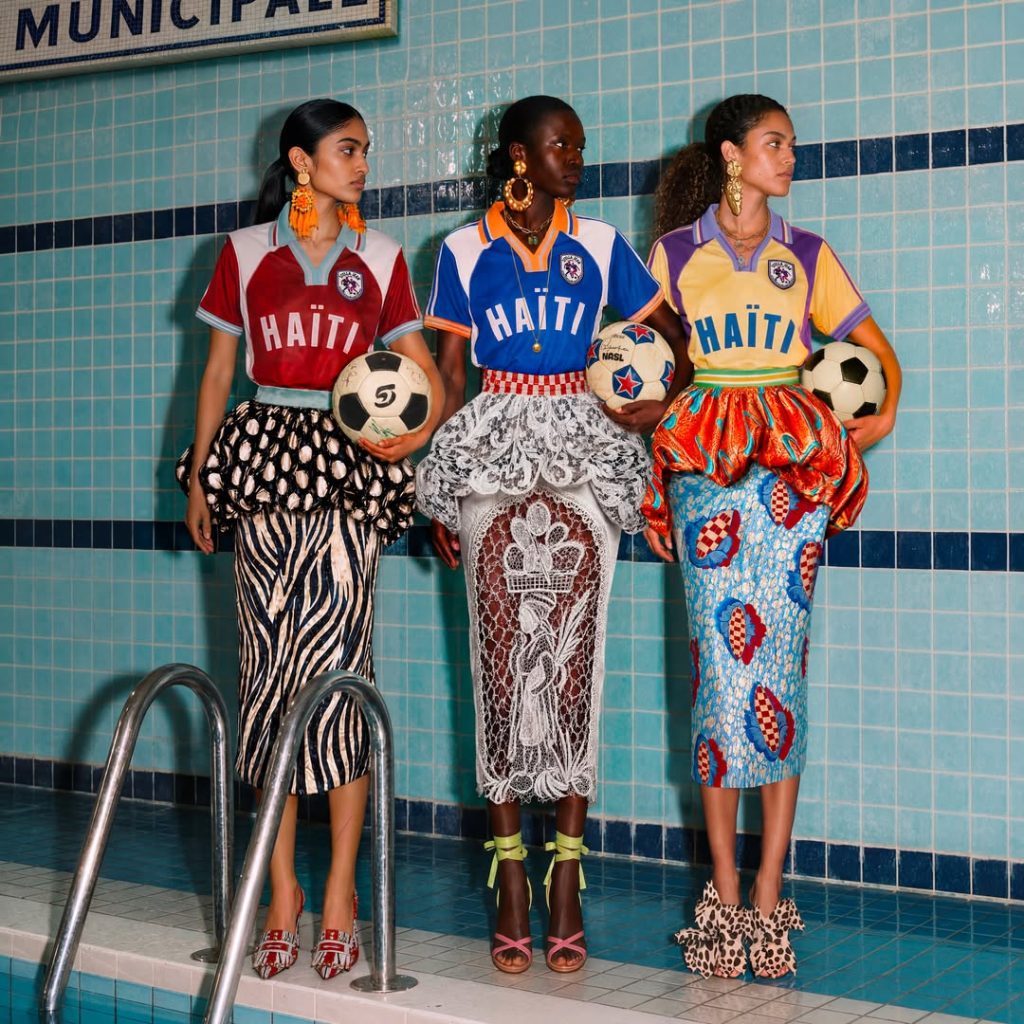
Image Source : Stella Jean
Because football style has changed. The jersey is no longer only match-day equipment. Gen Z already knows this. They wear club shirts with denim skirts, national team kits with loafers, retro football tops with jewellery, cargos, sunglasses, tiny bags, oversized blazers, whatever works. The pitch has spilled onto the sidewalk, and the sidewalk has made it more interesting.
Stella Jean’s collection understands that shift without chasing it too hard.
The pieces arrive as polo-style jerseys and dress silhouettes, using Haiti’s football colours in ways that feel immediate but considered. Red. Blue. White. Orange accents. The kind of palette that already carries national significance before a designer even begins. On the back appears the phrase “Lavi a bèl” alongside the number 26, a nod to 2026 and Haiti’s long-awaited return to football’s biggest stage.
Life is beautiful.
Simple words, yes, but on a Haitian football shirt in this moment, they do a lot of work.
Haiti has not appeared at the World Cup since the 1974 FIFA World Cup. Fifty-two years is a long time to wait for a return. In football terms, it is an entire generation passing the story to the next one. Old footage becomes fresh emotion. Memories become expectations. A tournament once spoken about in the past tense suddenly becomes part of the future again.
And Stella Jean gives that future something to wear.
What I like about this collection is that it does not feel like a costume. That could have gone wrong very quickly. Football and fashion collaborations can become a little too pleased with themselves, as though putting a jersey next to a dramatic skirt automatically creates meaning.
Here, the meaning comes from the context.
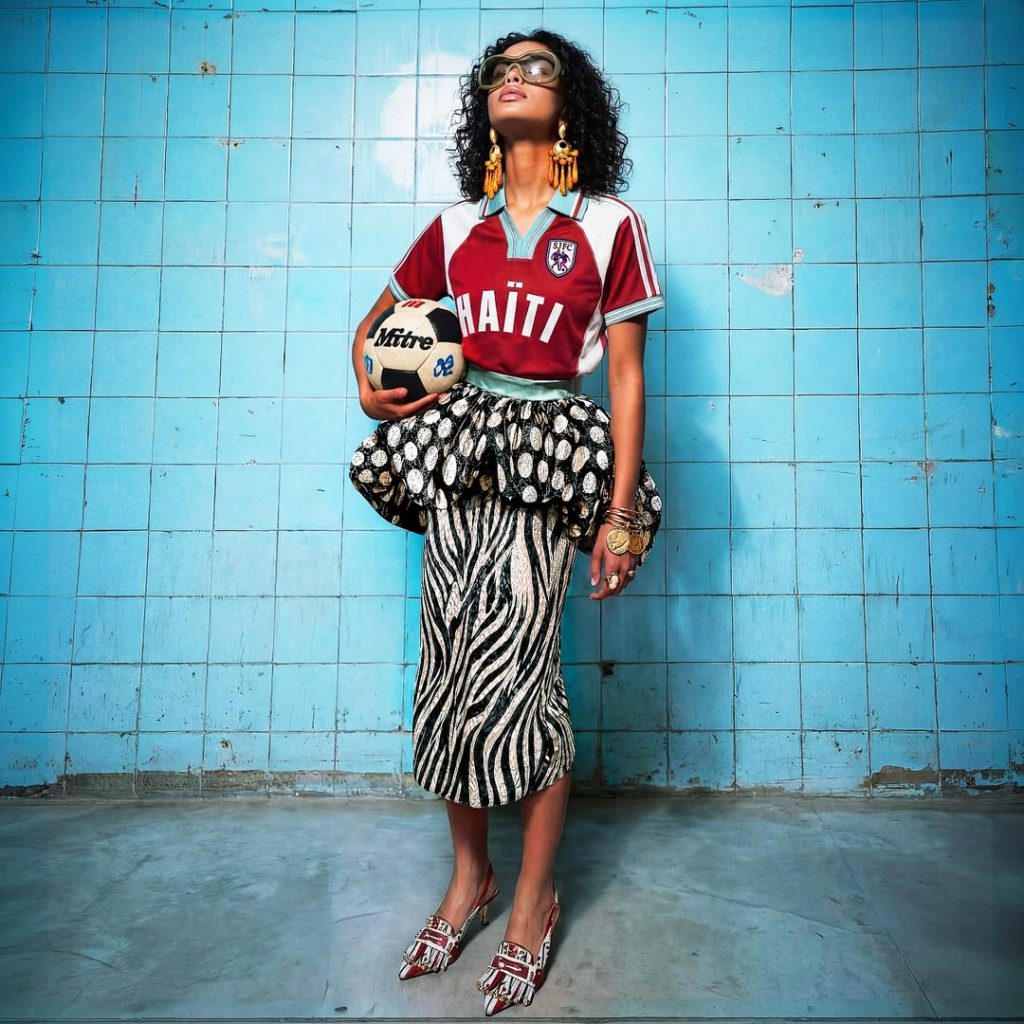
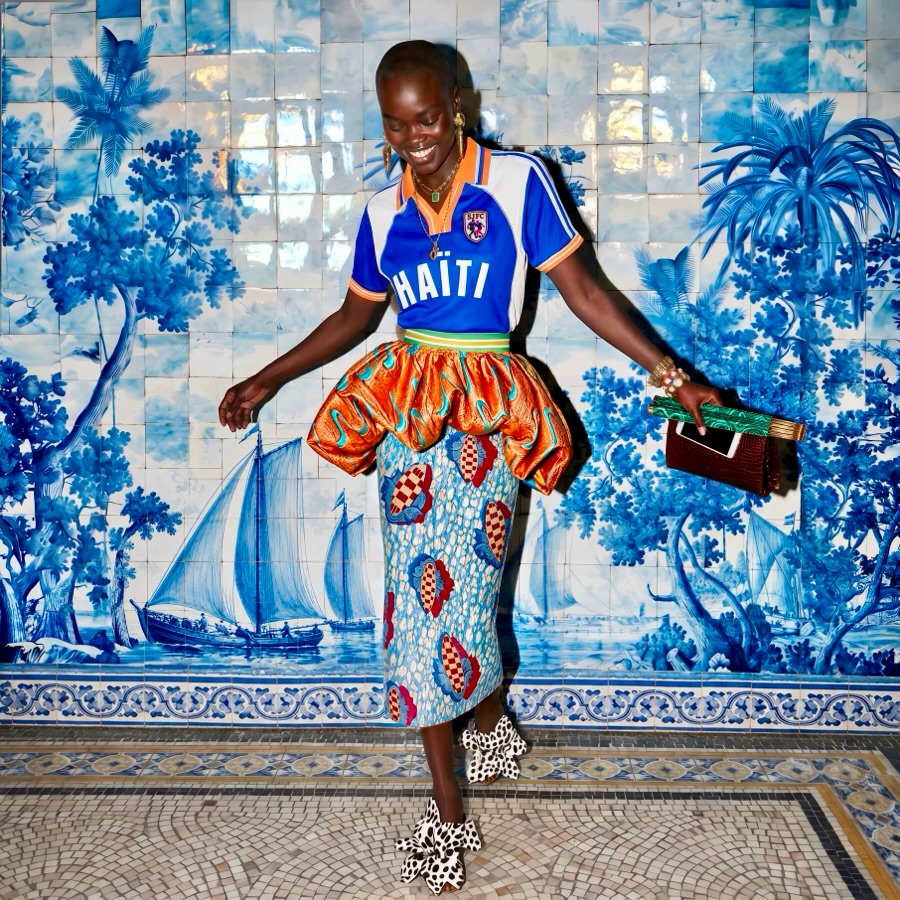
Image Source : Stella Jean
Haiti’s story is already charged. The influence of the African diaspora lives inside Caribbean culture in ways that do not need to announce themselves every five seconds. You see it in colour, rhythm, faith, craft, resistance, food, music, movement, and the stubborn refusal to disappear. Haiti, the first Black republic, carries history in its skin. You cannot separate its football story from that larger cultural narrative, and Jean does not try to.
She lets the jersey carry pride without turning it into a museum object.
That is the smartest part.
The collection feels alive because it understands that national identity is not frozen. It moves. It evolves. It gets interpreted differently by different people. One person sees a football shirt. Someone else sees home, family history, and a connection to a place they may not even live in anymore.
This is where the style conversation becomes interesting.
A football jersey is usually built around performance. Movement. Function. Endurance. Fashion often wants mood, image, and storytelling. Jean brings those instincts together without making them compete. The jersey keeps its sporting language, while the styling pulls it into another room. Suddenly the shirt is not only about who you support. It is about who you are, where you come from, and how you choose to be seen.
And yes, as a football fan, I love that.

Because football does this better than almost any other sport.
It turns fabric into feeling.
A kit can become sacred because of one tournament. One goal. One missed penalty. One summer. One player. One country finally getting its moment again.
For Haiti, 2026 is not just another date on the football calendar. It is a return. A statement. A reminder that history has a habit of coming back around when you least expect it.
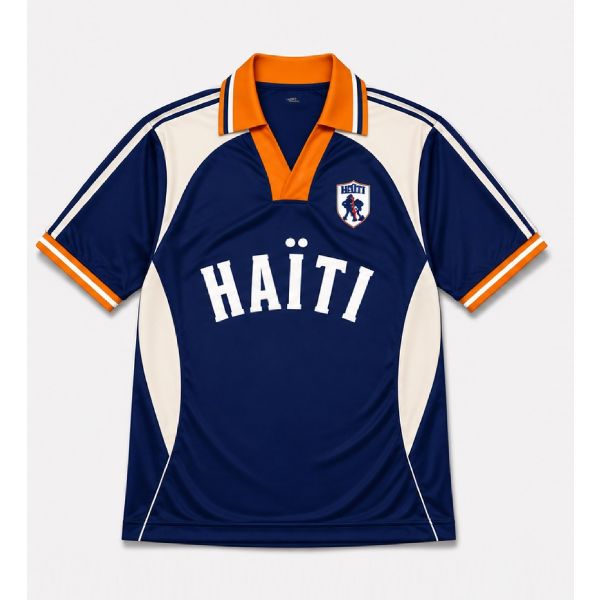
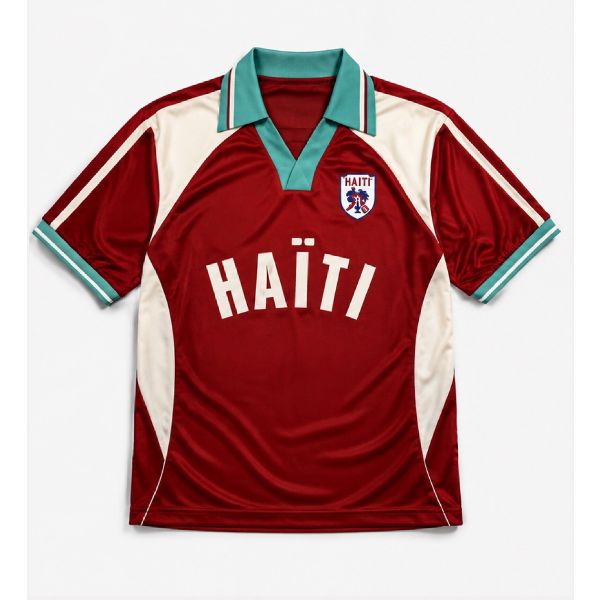
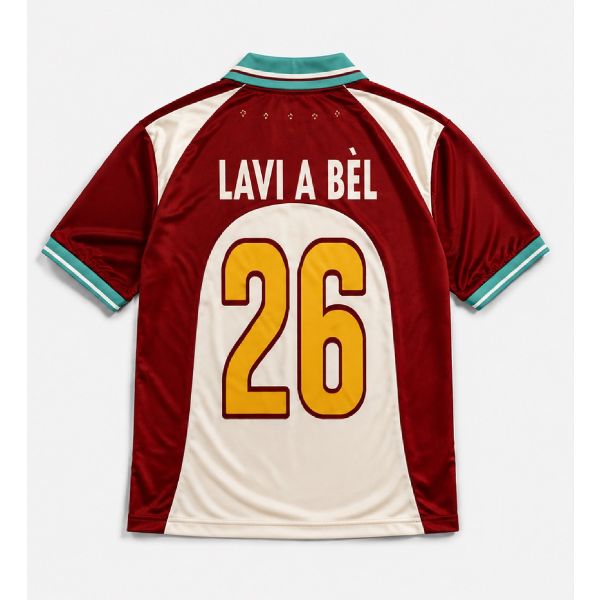
Image Source : Stella Jean
Stella Jean’s L’Haitiana does not replace the match kit. It does something else. It builds the story around it. The piece you wear when the game is bigger than the game. The shirt you put on when you want to feel part of the moment even if you are nowhere near the stadium.
That is what makes the collection interesting.
It is not trying to make football elegant. Football already has its own kind of elegance, even when it is messy, emotional, loud, and completely unreasonable. Stella Jean simply gives that emotion shape.
And maybe that is where the future of football fashion is heading.
Less about slapping a logo on a shirt and calling it a collaboration.
More about understanding why people care in the first place.
A great jersey does not only tell you who is playing. It tells you who is watching.
And with L’Haitiana, Haiti is arriving dressed for the moment.
What's Your Reaction?

