
The Return of the Third Place

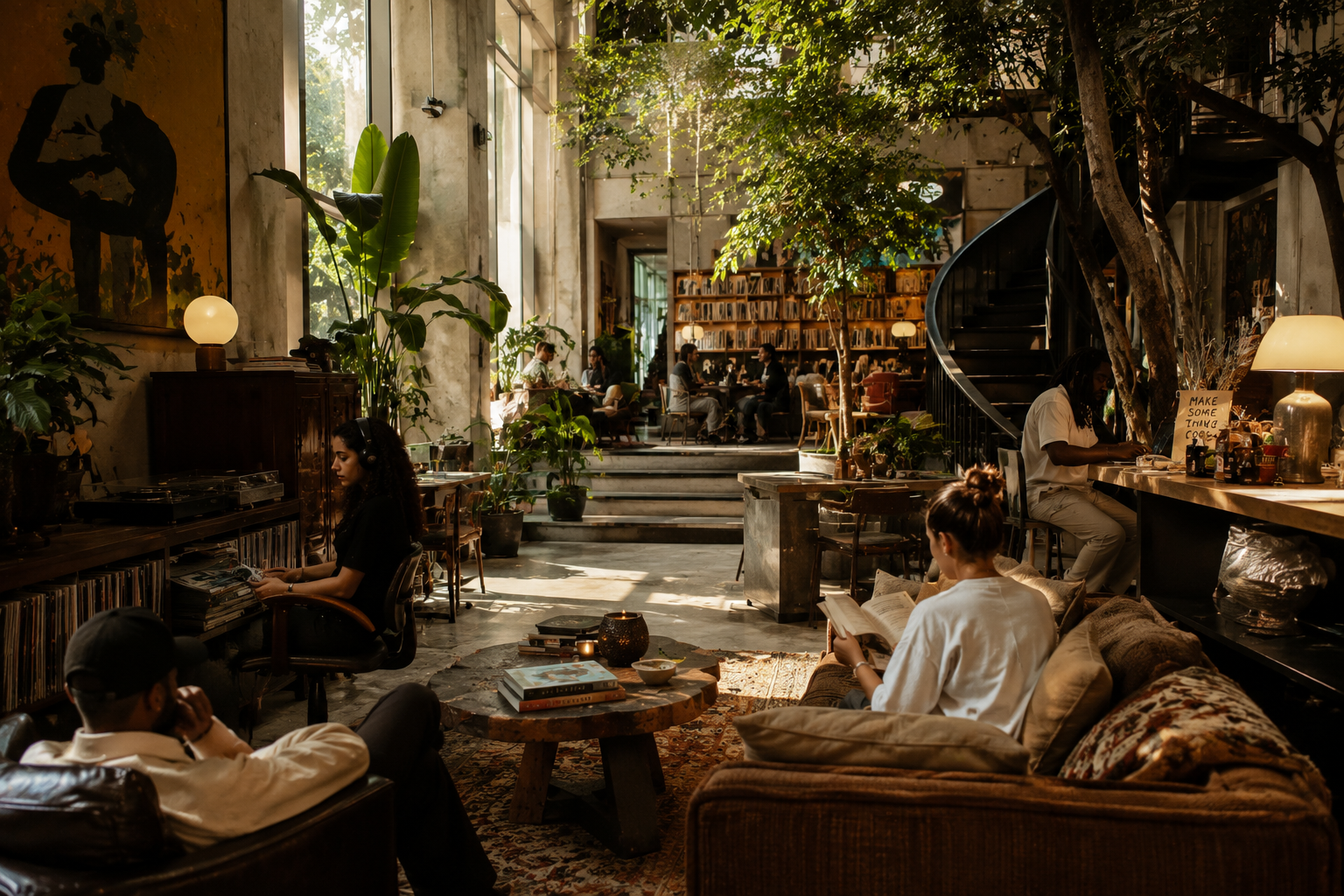

There was a time when every neighbourhood had a place where people naturally gathered. It wasn’t home, and it wasn’t work, but somewhere in between, a café where the barista knew your order before you reached the counter, a library where nobody expected you to spend money, or a park bench that somehow became the unofficial meeting point for friends every Friday afternoon. These places rarely announced their importance, yet they quietly shaped the rhythm of everyday life.
For a while, it felt as though many of them were disappearing. Our lives became increasingly digital, conversations moved onto screens and convenience slowly replaced community, leaving us remarkably efficient at staying connected while spending less time together.
Lately, though, something has been changing.
Across cities around the world, people are rediscovering what urban sociologist Ray Oldenburg famously described as the “third place,” those spaces that exist beyond home and work, where conversations unfold naturally, ideas are exchanged without an agenda and strangers gradually become familiar faces.
It’s one of the most encouraging cultural shifts I’ve noticed in recent years.
Walk into an independent bookstore on a Saturday morning and you’ll find people reading long after they’ve chosen a book, while hotel lobbies have quietly evolved into meeting places even for those who aren’t staying overnight. Museum cafés have become destinations in their own right, and thoughtfully designed neighbourhood cafés now serve as informal living rooms for freelancers, students, families and travellers, each adding their own chapter to the life of a community.
People aren’t simply looking for somewhere to sit, but for somewhere that feels familiar, where a cup of coffee or an hour with a book becomes part of a larger sense of belonging.
Perhaps that’s because, after years of living at an exhausting pace, we’re beginning to realise that community rarely arrives through grand gestures. More often, it grows from small, repeated encounters, seeing the same faces each week, learning someone’s name, sharing a table because there isn’t another seat available, or lingering in conversation without watching the clock.

These moments rarely make headlines, yet they’re often the moments that give a city its character.
The destinations we remember most aren’t defined solely by their architecture or celebrated restaurants. They’re remembered for the feeling they leave behind, and more often than not, that feeling is shaped by the spaces where everyday life unfolds naturally, without tickets, reservations or carefully curated itineraries.
It’s no coincidence that some of the world’s most liveable cities continue to invest in public libraries, waterfront promenades, neighbourhood cafés, community gardens and cultural centres. They’re investing in something that has become increasingly valuable, creating places where people can spend time together without needing a reason, because the simple act of sharing space is, in itself, what builds stronger communities.
Perhaps that’s why the third place feels more relevant today than ever before, because beneath all the technology, convenience and constant movement, we’re still searching for what people have always needed: conversation, community and the reassuring feeling of belonging somewhere.
What's Your Reaction?

